El-Rufai Denies Tapping Ribadu’s Phone, Makes Fresh Revelation
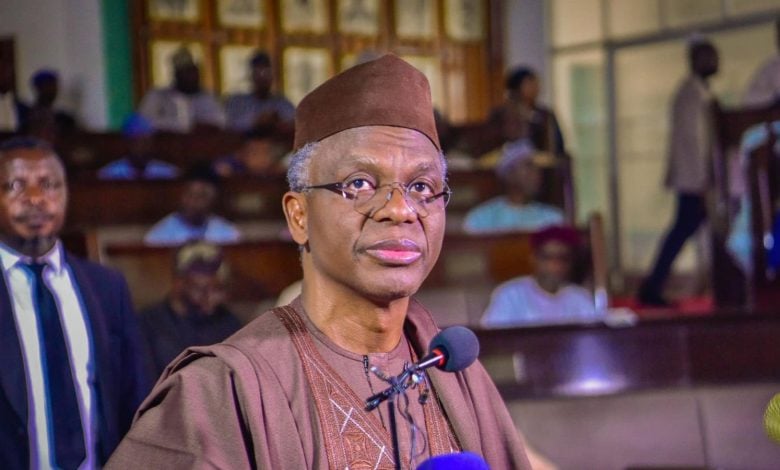
Former Kaduna State Governor, Nasir El-Rufai, has denied allegations that he intercepted the telephone conversations of National Security Adviser (NSA), Nuhu Ribadu, insisting that he neither carried out the operation nor instructed anyone to do so.
El-Rufai made the clarification on Wednesday while defending himself in the ongoing phone-tapping case before the Federal High Court in Abuja.
He told the court that he had never possessed any equipment capable of intercepting telephone communications and lacked the technical knowledge required to carry out such an operation.
The former governor also maintained that he had no access to Ribadu’s communication networks or personal devices, dismissing the allegations against him as a misinterpretation of comments he made during a television interview in February 2026.
Led in evidence by his lawyer, Paul Erokoro, a Senior Advocate of Nigeria (SAN), El-Rufai explained that his controversial remarks were not intended to suggest that he personally intercepted the NSA’s telephone conversations.
He described the comments as political rhetoric, arguing that his choice of words during the interview was influenced by the political tension between him and the Federal Government at the time.
According to him, his reference to listening to Ribadu’s telephone conversations was not a literal admission of involvement in an illegal surveillance operation.
“I used ‘we’ to refer to opposition politicians. When I said ‘tapped’, it was an embellishment intended to make the government feel the pain we are feeling. It was rhetorical and exaggerated. My objective was to engage in political retort and linguistic flourish,” he told the court.
El-Rufai further explained that he was using political language to respond to what he considered unfair treatment by the government.
He maintained that his statement should not be interpreted as evidence that he personally participated in telephone interception.
The former governor’s testimony marks an important stage in the case, which arose from comments he made during an interview on Arise Television’s Prime Time programme on February 13, 2026.
The interview was granted a day after security operatives reportedly attempted to arrest him at the Nnamdi Azikiwe International Airport in Abuja following his return from Cairo, Egypt.
Although the operatives reportedly seized his international passport, they did not take him into custody at the airport.
During the television appearance, El-Rufai accused Ribadu of being behind the attempted arrest, alleging that the NSA had instructed security operatives to apprehend him.
He claimed that he became aware of the alleged directive after listening to a telephone conversation involving the NSA.
His comments subsequently generated controversy and attracted the attention of security authorities, eventually leading to criminal proceedings against him.
The Federal Government, through the Department of State Services (DSS), instituted the case over allegations that El-Rufai was involved in the unlawful interception of Ribadu’s telephone communications.
The prosecution argued that his statements during the television interview amounted to an admission that he and other individuals had gained access to the NSA’s telephone conversations without lawful authorisation.
However, El-Rufai has consistently disputed the allegations, maintaining that the prosecution’s interpretation of his television comments does not reflect what he intended to communicate.
The case has also featured arguments over the meaning of his statements and the evidence presented by the prosecution.
During an earlier sitting, the prosecution called two witnesses, including a DSS operative and human rights lawyer Deji Adeyanju.
Adeyanju, who appeared as a prosecution witness, told the court that he was present at Arise Television when El-Rufai granted the interview in February.
He said he heard the former governor make comments suggesting that conversations involving the National Security Adviser had been intercepted.
The court also heard testimony concerning the recording of the television interview, which was presented as part of the prosecution’s evidence.
Adeyanju reportedly acknowledged during cross-examination that El-Rufai did not specifically state that he personally hacked Ribadu’s telephone lines.
However, he maintained that he heard the former governor say that they had listened to the NSA’s conversations.
Following the conclusion of the prosecution’s case, El-Rufai filed a no-case submission through his legal team, asking the court to discharge and acquit him.
His lawyers argued that the evidence presented by the DSS was insufficient to establish a case requiring him to defend himself against the allegations.
The prosecution, however, opposed the application, insisting that the evidence before the court was sufficient to warrant a response from the former governor.
On October 26, Justice Joyce Abdulmalik of the Federal High Court rejected the no-case submission and directed El-Rufai to enter his defence.
The judge held that the prosecution had presented sufficient evidence to require him to respond to the allegations contained in the amended charges.
The ruling did not amount to a conviction or a determination that the former governor was guilty of the offences. It only allowed the trial to proceed to the defence stage.
The court subsequently fixed November 25 for El-Rufai to open his defence, leading to Wednesday’s proceedings.
El-Rufai has maintained his innocence, while the DSS is pursuing the case based on the allegations contained in its amended charge.
The trial is continuing before the Federal High Court in Abuja.