FG Promises Security for Voters, INEC Officials During 2027 Polls
The Federal Government has assured Nigerians that adequate security measures will be put in place to protect voters, political candidates, electoral officials and other participants during the 2027 general elections.
The government said security agencies would remain on alert before, during and after the elections to prevent political violence, intimidation and other activities capable of disrupting the electoral process.
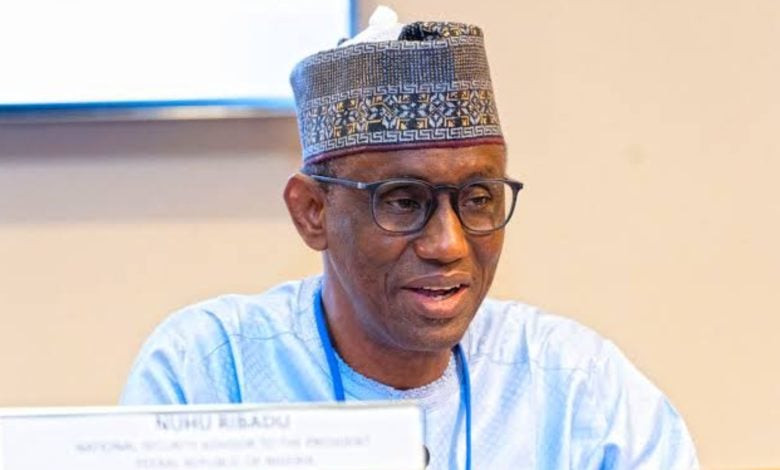
The assurance was given by the National Security Adviser (NSA), Mallam Nuhu Ribadu, on Thursday during the Strategic Election Security Conference held in Abuja.
The conference was organised jointly by the Independent National Electoral Commission (INEC) and the Office of the National Security Adviser.
It brought together key stakeholders to discuss security challenges ahead of the 2027 elections and develop strategies to ensure a peaceful electoral process.
Speaking at the event, Ribadu said the Federal Government recognised its responsibility to protect every Nigerian participating in the elections, regardless of political affiliation.
He maintained that security agencies would not allow violence or intimidation to prevent citizens from exercising their constitutional rights.
“The duty of government and the security agencies is to protect voters, electoral officials and the wider population before, during and after the election. We will protect you. We will protect the voters. We will protect politicians. And even after the election, we will make sure there is no violence,” he declared.
The NSA said the administration of President Bola Tinubu was committed to creating an environment where Nigerians could participate freely in the electoral process without fear.
He described the protection of lives and property as an important condition for conducting peaceful and credible elections.
According to him, the government would provide the necessary support to security institutions to enable them to carry out their responsibilities effectively.
Ribadu also addressed concerns about the possible involvement of security agencies in political activities.
He insisted that officers deployed for election duties would operate within the provisions of the law and maintain professional neutrality.
He said their independence and impartiality must be respected, particularly as preparations for the 2027 elections gathered momentum.
The NSA stated that security agencies would not take sides with political parties or candidates, adding that their responsibility was to ensure that the electoral process remained peaceful and protected.
“Security agencies will discharge their responsibilities impartially and in accordance with the law,” he added.
He also referred to the leadership of INEC under its chairman, Professor Joash Amupitan, stressing the importance of allowing the commission to carry out its constitutional duties without interference.
However, Ribadu identified the spread of misinformation on social media as one of the major threats that could affect the security situation during the elections.
He warned that misleading publications, unverified reports and provocative statements could create tension among communities and trigger violence.
“Social media is a big problem. It creates false narratives and misinformation, causing problems among people. One individual, sitting somewhere in a village, could say something that triggers trouble,” he said.
He urged political actors and their supporters to exercise restraint when using social media, particularly during campaigns and other election-related activities.
The NSA further warned politicians against adopting violent methods in their pursuit of political power.
He said some political actors could become desperate during elections and resort to unlawful actions capable of threatening public peace.
“Sometimes they become desperate. There is almost nothing they may not do,” he said.
Meanwhile, INEC Chairman, Professor Joash Amupitan, expressed concern over the growing cases of political violence and attacks involving supporters of political parties.
He criticised political parties that publicly commit themselves to peaceful elections through the signing of peace agreements but allegedly tolerate violent activities in different states.
According to him, political parties must demonstrate genuine commitment to peaceful campaigns rather than treating peace agreements as formalities.
“Signing peace accords in Abuja while tolerating or financing thuggery in the states is a contradiction our democracy can no longer afford,” he said.
Amupitan disclosed that the commission had observed an increase in political violence since the commencement of open campaigns in August 2026.

He listed several states where attacks and other violent incidents had reportedly occurred, including Lagos, Edo, Ekiti, Enugu, Ebonyi, Delta, Cross River, Oyo and Benue.
The INEC chairman described the situation as a growing threat to democratic participation, particularly where political disagreements had resulted in attacks on campaign convoys, party offices, supporters and political gatherings.
He said Nigeria had witnessed “a disturbing escalation in political intolerance, incendiary rhetoric, and coordinated physical attacks” during political activities.
Amupitan also raised concerns about attacks against INEC personnel and facilities, warning that the commission would not allow threats or intimidation to influence its responsibilities.
He maintained that electoral officials must be allowed to perform their duties without pressure from politicians or their supporters.
“We will neither be intimidated nor blackmailed into compromising our neutrality, and every attack on INEC personnel, facilities, or materials will be met with the full weight of the law,” he said.
The commission’s chairman further warned political party leaders that they could not completely distance themselves from violent actions carried out by their supporters and campaign structures.
He argued that those who organise, encourage or provide support for political violence must also be held accountable.
Amupitan stressed that “party leadership bears moral and political responsibility for the conduct of its candidates, campaign councils, and youth wings”.
He explained that political violence could affect the credibility of elections in several ways, beginning with the restriction of voter participation.
According to him, attacks during campaigns and threats against communities could discourage ordinary Nigerians from attending political gatherings or visiting polling units on election day.
“When bullets replace ballots and rallies end in bloodshed, ordinary citizens stay home, effectively disenfranchising millions of peaceful Nigerians,” he said.
He also expressed concern about the safety of more than 1.41 million ad hoc personnel expected to participate in the conduct of the 2027 elections.
The majority of these workers are members of the National Youth Service Corps (NYSC), who will be deployed across the country’s 177,299 polling units.
The INEC chairman said the commission had a responsibility to ensure that these young Nigerians could carry out their assignments without being exposed to unnecessary danger.
“No parent or institution will willingly deploy young Nigerians into environments where political thugs operate with impunity,” he said.
Amupitan identified another major concern as the possibility that violence before the elections could influence how political parties and their supporters respond to the eventual results.
He warned that attacks, intimidation and inflammatory political statements could create an atmosphere of distrust, making it difficult for some political actors to accept the outcome of the elections.
“Pre-election violence conditions the political climate for post-election rejection,” he said.
He cautioned that collation centres could become potential flashpoints if adequate security arrangements were not made to prevent disruptions and attacks.
The INEC chairman also drew attention to the importance of Nigeria’s electoral process beyond its borders.
He said the country’s size, population and position in West Africa meant that developments surrounding the 2027 elections could have implications for regional stability.
According to him, peaceful elections would strengthen democratic institutions and reinforce constitutional order across the sub-region.
He described a peaceful electoral process as “the primary anchor of regional stability and constitutional order”.