Sachet Alcohol Sellers Protest in Ibadan, Appeal to Tinubu Over Ban
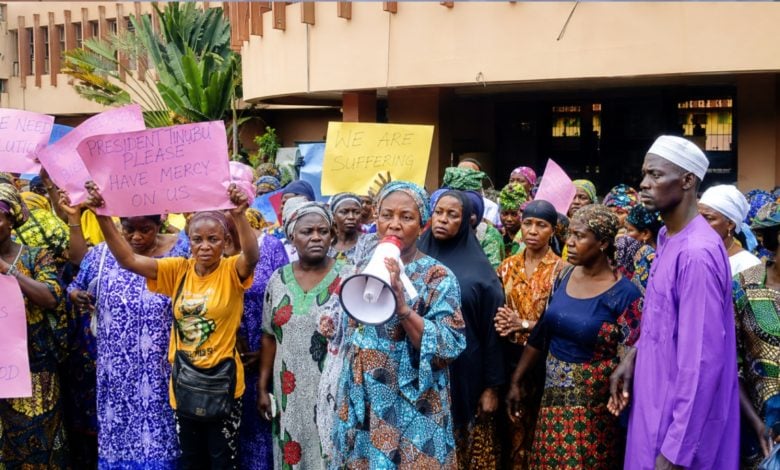
Sachet alcohol sellers in Ibadan, Oyo State, have appealed to President Bola Tinubu and the Federal Government to reconsider the ban on alcoholic drinks packaged in sachets and small containers below 200 millilitres.
The traders made the appeal on Thursday during a protest at the Federal Secretariat in Ikolaba, Ibadan.
They marched to the facility carrying placards and calling for a review of the policy, which they said had put their businesses and livelihoods at risk.
The protesters said they were not opposed to measures aimed at protecting Nigerians from alcohol abuse.
However, they urged the government to consider the economic impact of the ban on thousands of petty traders who depend on the sale of the products for their daily income.
They also called for broader discussions between the Federal Government, regulatory agencies, manufacturers, distributors and retailers.
According to them, such discussions could produce a solution that addresses public health concerns without completely destroying the businesses of small-scale traders.
The protest comes amid renewed enforcement of the Federal Government’s prohibition on alcoholic beverages packaged in sachets and PET or glass containers below 200ml.
The National Agency for Food and Drug Administration and Control, NAFDAC, has intensified enforcement and market surveillance since the ban took effect.
Speaking during the protest, the Iyalode of sachet alcohol traders in Ibadan, Iyabo Balogun, said many women in the business had no alternative source of income.
Balogun particularly appealed to President Tinubu to consider the situation of widows and other women who use the trade to provide food and education for their families.
“Most of us selling sachet alcohol are widows, and this is our source of livelihood. We are calling on the federal government to lift the ban.
“It is from this business we train our kids in school and also feed. Please have mercy on us. We want President Tinubu to consider our appeal,” she said.
The traders said the ban had affected their ability to earn a living, adding that many of them had invested their limited resources in the business before the latest enforcement exercise.
They asked the government to consider a transition arrangement that would allow affected traders to move into other businesses.
They also appealed for financial support and other forms of assistance if the government would not reverse the policy.
The protesters were received by the Oyo State Coordinator of NAFDAC, Dr Isaac Kolawole, who acknowledged their peaceful approach and listened to their concerns.
Kolawole, however, explained that the government’s position was largely driven by concerns over the health effects and easy accessibility of high-alcohol-content products in small and easily concealed packages.
He said the government had given manufacturers and traders time to adjust to the policy before the latest phase of enforcement.
“Since February 2024, we have been starting, mopping, and stopping to give your complaints a chance for you to adjust. Nobody is adjusting, but some people are adjusting; you are not aware. Some people among you have accepted their fate and have adjusted,” he said.
The NAFDAC official urged the protesters to begin considering other businesses instead of depending on the reversal of the ban.
He said some people affected by the policy had already changed their businesses, adding that the traders could also approach government authorities for support in finding alternative sources of income.
Kolawole further linked the government’s position to health problems associated with excessive alcohol consumption.
“So, go and adjust, because the children that are dying in the hospital from liver and kidney problems and other psychological problems are more than the ones that you know,” Kolawole said.
He also encouraged the traders to engage the government on possible intervention rather than focusing solely on lifting the restriction.
“It is difficult where we are now, but I want to plead with you to approach the government by asking what the government can do for you to replace your business and make you better than before,” he said.
The Federal Government’s restriction affects alcoholic beverages packaged in sachets and alcoholic drinks sold in PET or glass containers below 200ml. Larger approved packaging is not covered by the restriction. NAFDAC has previously clarified that the policy targets the prohibited pack sizes rather than all alcohol-producing companies.
The policy followed years of discussions between the government, manufacturers and other stakeholders over the availability of small-sized alcoholic drinks.
NAFDAC had earlier provided an adjustment period to allow producers to change their packaging and production arrangements.
The agency announced in November 2025 that enforcement would proceed after the expiration of the final adjustment period. NAFDAC said the decision was also in line with a Senate directive concerning the restriction.
Enforcement commenced in early 2026, although the policy has continued to generate controversy among traders, manufacturers and other stakeholders.
In February, NAFDAC also rejected reports that the Federal Government had ordered it to suspend enforcement of the ban. The agency said it had received no formal directive to stop its regulatory activities.
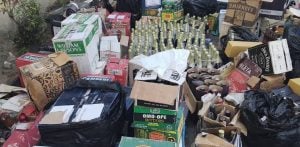
In July, NAFDAC announced a nationwide mop-up operation targeting sachet alcohol and alcoholic beverages in PET bottles below 200ml.
The agency also reported discovering manufacturers who allegedly continued producing the prohibited products despite the ban.
NAFDAC’s Director-General, Prof. Mojisola Adeyeye, said in July that enforcement teams had found packaging materials carrying production dates from the same month, suggesting that some manufacturers were still producing the banned products after the restriction took effect.
The agency subsequently sealed some facilities accused of violating the regulation.
For the Ibadan traders, however, the immediate concern remains the effect of the ban on their livelihoods.
The protesters want the Federal Government to consider their economic situation while pursuing its public health objectives.
They also want government agencies to engage directly with traders and provide practical support for those expected to leave the business.