Nigerian Army Adopts New Strategy to Combat Insecurity, Book Reveals
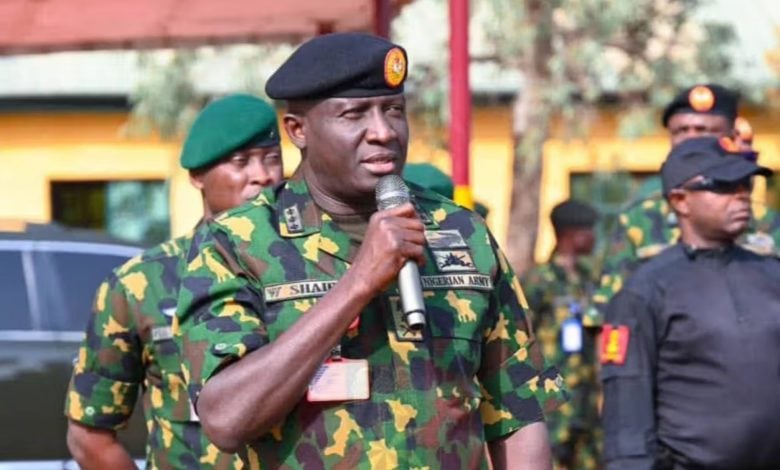
The Nigerian Army has adopted a new approach to military operations aimed at improving its response to insurgency, terrorism and other security threats across the country.
The strategy, known as mission command, gives commanders clear objectives while allowing them greater freedom to make decisions and respond to situations on the ground.
The approach is at the centre of a new book examining the leadership style of the Chief of Army Staff, Lt. Gen. Waidi Shaibu, and the changes taking place in the Nigerian Army under his leadership.
The book, titled The Shaibu Doctrine: Mission Command and the Remaking of Nigeria’s Army at War, was unveiled in Abuja as its authors called for greater attention to military doctrine and leadership in Nigeria.
The publication examines how mission command is being applied to ongoing military operations and how greater responsibility is being given to commanders closer to the operational theatre.
According to the authors, the strategy is intended to make the Army more flexible in dealing with security situations that can change quickly.
Lead author Dr. AK Etta Peters said the publication was designed to go beyond recording military events.
He said it seeks to preserve the lessons from the current period of military operations for future generations.
“This is not just documentation of events. It is rigorous scholarship with deep operational insight, preserving leadership lessons for future generations,” Peters said.
Peters described the book as a study of leadership in action and said the approach adopted by Shaibu had contributed to changes in the way the Army responds to security challenges.
He said the Chief of Army Staff’s emphasis on mission command had made the Nigerian Army “more adaptive, more professional, and more connected to the people it serves.”
The authors linked the strategy to improvements in troop morale, operational speed and relations between soldiers and civilians in areas where military operations are being conducted.
They also said the approach had contributed to gains recorded in the fight against insurgency and other forms of insecurity.
Peters stressed that military strength alone would not be enough to defeat the security threats facing Nigeria.
He argued that the country also needed clear doctrines that could guide military operations beyond the tenure of individual commanders.
“The gains we are recording are not by accident. They are the product of doctrine, discipline, and decisive leadership. Firepower alone will not win this war. We need ideas. We need doctrine. We need to institutionalize the lessons we are learning” Peters stated.
Mission command generally places emphasis on giving troops a clear understanding of their objectives while allowing commanders at different levels to exercise initiative when circumstances change.
Co-author Dr. M.S. Abubakar said Nigeria had been fighting insurgency since 2009 and had employed different strategies over the years.
He said the approach introduced under Shaibu represents a different way of giving field commanders the responsibility to execute assigned missions.
“Put the men on the ground, tell them what to do, and they know how to get it done,” Abubakar explained.
“This is turning around the story. The Nigerian Army has regained ground and we are winning the war more rapidly.”
Abubakar said the nature of the conflict also made it necessary for the military to adopt a strategy that could work in an environment where the enemy does not always operate from clearly defined battle lines.
He described the conflict as asymmetric warfare, pointing out that insurgents can operate within communities and blend into the civilian population.
The authors therefore argued that commanders operating close to affected communities must have sufficient understanding and flexibility to respond to developments without waiting for lengthy instructions from higher levels of command.
The book also examines the wider leadership philosophy of Shaibu and his efforts to strengthen professionalism, operational readiness and institutional capacity within the Nigerian Army.
Shaibu had earlier outlined a command philosophy built around five areas: Professional Excellence, Robust Administration, Operational Readiness, Strategic Cooperation and Exemplary Leadership.
The framework, known by the acronym PROSE, was presented as part of efforts to strengthen leadership and readiness within the Army.
The new publication comes at a time when the Nigerian military remains heavily involved in operations against insurgents, terrorists, bandits and other armed groups across several parts of the country.
It also places emphasis on the need for military institutions to preserve operational knowledge and ensure that successful practices are not lost when commanders leave office.
Peters said the book could serve different purposes for the country.
He explained that policymakers could use it as a strategic reference, while the military could regard it as an institutional record of the lessons emerging from ongoing operations.
He also said scholars, military cadets and other students of national security could use the publication to understand contemporary military leadership and the evolution of Nigeria’s response to insecurity.
The authors said the publication aligns with President Bola Tinubu’s Renewed Hope Agenda, particularly in the area of national security.
According to them, the President wrote the foreword to the book, a development they said reflected the importance attached to the issues examined in the publication.
The book was co-authored by Dr. Sunday Adejoh of the Nigerian Defence Academy and Dr. M.S. Abubakar, with Peters playing a leading role in presenting the publication and its central arguments to the public.
The public presentation of The Shaibu Doctrine: Mission Command and the Remaking of Nigeria’s Army at War is scheduled for October 30, 2026, at the Congress Hall of the Transcorp Hilton Hotel in Abuja.
The authors maintained that the central issue is not simply the deployment of more troops or weapons, but the ability of commanders and soldiers to understand their missions, act decisively and adapt to changing conditions.
They also called for the lessons contained in the book to be institutionalised so they can continue to guide military operations regardless of changes in leadership.
“But this strategy is a winning strategy. We want this strategy to be known and imbibed by all, so that the mileage we have covered, we will cover more, faster, and gain more grounds for the betterment of Nigeria,” Abubakar said.