Nigeria’s Inflation Falls to 15.39%
Nigeria’s headline inflation eased marginally to 15.39 per cent in August 2026, compared with 15.43 per cent in July, the National Bureau of Statistics (NBS) said in its latest Consumer Price Index report released on Tuesday.
The August figure marks a 0.04 percentage-point decline from the previous month and is substantially below the 23.14 per cent recorded in August 2025.
According to the bureau, the CPI rose from 145.3 points in July to 146.3 points in August, an increase of 1.0 point. On a month-on-month basis, however, headline inflation slowed considerably, falling to 0.71 per cent from 1.57 per cent in July.
The NBS said the data showed that prices continued to rise during the month, but at a slower pace than in July.
For the 12 months ending in August 2026, the average CPI increased by 16.30 per cent. This was 12.02 percentage points lower than the 28.32 per cent 12-month average inflation rate recorded in August 2025.
Urban inflation also moderated. The year-on-year rate declined to 15.88 per cent in August from 16.12 per cent in July, while urban month-on-month inflation fell to 0.28 per cent from 1.90 per cent.
The average urban inflation rate for the 12 months ending August 2026 was 16.28 per cent, compared with 29.73 per cent during the corresponding period of the previous year.
Rural inflation followed a different pattern. Year-on-year rural inflation rose to 14.23 per cent in August, while the month-on-month rate increased to 1.79 per cent from 0.78 per cent in July. The 12-month average rural inflation rate stood at 16.02 per cent, down from 26.47 per cent a year earlier.
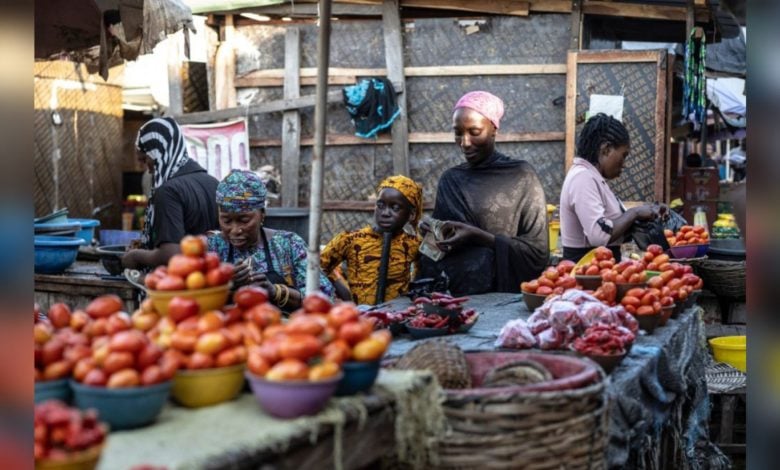
Food inflation recorded a notable slowdown as well. It fell to 19.57 per cent year-on-year in August 2026, compared with 25.30 per cent in August 2025. On a monthly basis, food inflation dropped to 1.02 per cent from 5.56 per cent in July.
The NBS linked the movement in food prices to changes in the costs of commodities such as palm oil, carrots, pepper, onions, cassava flour, beef, yam flour, water yam, melon, fresh ginger, fresh fish, Irish potatoes, wheat grain, frozen chicken and turkey meat.
The bureau stressed that food prices still increased in August, although the rate of increase was considerably slower than in the preceding month.
The latest report follows the decline in headline inflation from 15.91 per cent in June to 15.43 per cent in July. Food inflation, however, rose in July to 20.31 per cent from 17.52 per cent in June before easing sharply in August.
The July data also revealed wide variations among states. Adamawa recorded the highest year-on-year headline inflation at 33.03 per cent, followed by Yobe at 25.21 per cent and Anambra at 23.99 per cent.
Overall, the August figures point to a continued moderation in inflation, though price pressures remain uneven across the country. Households and businesses continue to contend with high costs for food, transport, energy and other necessities.
A lower inflation rate does not mean that prices have fallen. Rather, the NBS figures show that the general price level continued to rise in August, but more slowly than it did in July.