Ebola: The Patient’s Condition Has Deteriorated – NCDC Gives Update
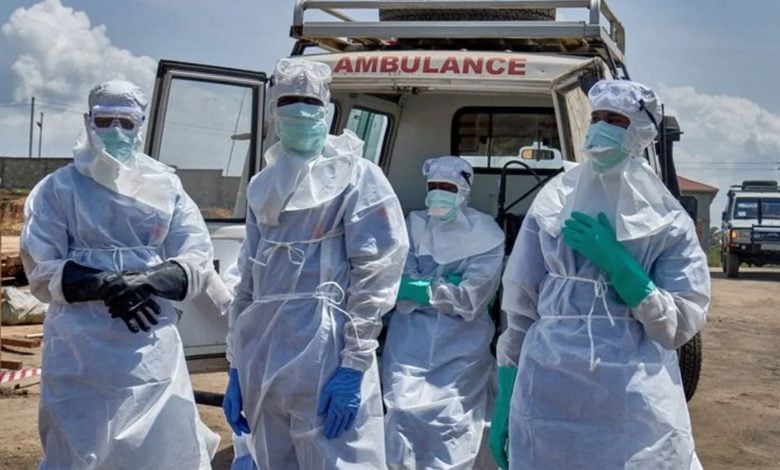
The Nigeria Centre for Disease Control and Prevention (NCDC) has disclosed that the condition of a diplomat diagnosed with Ebola virus disease in the Federal Capital Territory (FCT), Abuja, has deteriorated into multi-organ failure.
The agency disclosed this on Wednesday, October 21, during an emergency incident management meeting in Abuja.
It comes a day after the Federal Government confirmed that a woman who recently arrived in Nigeria from Uganda had tested positive for the virus.
The patient, whose nationality has not been disclosed, was diagnosed with the Bundibugyo strain of Ebola, a rare and severe strain of the virus that causes a form of viral haemorrhagic fever in humans.
Olajumoke Babatunde, NCDC’s Director of Public Health Laboratory Services, disclosed that laboratory tests confirmed the strain responsible for the infection.
“We did three levels of tests, but all were molecular. The strain was Bundibugyo,” Babatunde said.
Another official at the meeting disclosed that the infected woman is a diplomat, adding that her condition had worsened significantly.
“This person is actually a diplomat,” the official said.
The official further revealed that the patient’s condition had deteriorated into “multi-organ failure”, indicating that the infection had severely affected multiple organs in her body.
However, the authorities did not disclose the diplomat’s nationality or provide further details about the medical complications she was experiencing.
The Bundibugyo strain is one of the species of Ebola virus responsible for severe illness in humans. It was first identified in Uganda in 2007 and has since been associated with outbreaks in parts of Africa.
The virus spreads through direct contact with the blood and other bodily fluids of an infected person who is showing symptoms, as well as through contact with contaminated materials.
On Tuesday, the Federal Government announced the confirmation of the infection in the FCT after laboratory tests established that the woman had contracted Ebola.
The Minister of Health and Social Welfare, Prof. Muhammad Ali Pate, said the patient had arrived in Nigeria on an international flight from Uganda before she was admitted to a private hospital in Abuja.
According to the minister, the woman received medical attention at the facility for several days before the diagnosis was confirmed.
“She is currently in isolation and receiving medical care,” Pate said in his earlier statement.
The minister explained that the Federal Ministry of Health and Social Welfare, the NCDC and the FCT Health Services Secretariat were working with other relevant authorities to contain the infection and prevent further spread.
He also disclosed that contact tracing had commenced, with 44 close contacts identified as of the time of the announcement.
The individuals identified for monitoring include healthcare workers, patients, caregivers and travel contacts who may have been exposed to the infected woman.
The authorities have not disclosed whether any of the 44 identified contacts have developed symptoms or tested positive for the virus.
The NCDC has previously warned about the risk of Ebola being imported into Nigeria amid outbreaks in other African countries.
Ebola virus disease can cause symptoms such as fever, severe weakness, headache, muscle pain and sore throat. Some patients may subsequently develop vomiting, diarrhoea, rashes and internal or external bleeding.
The incubation period ranges from two to 21 days, and infected individuals generally become capable of transmitting the virus after symptoms develop.
Nigeria previously recorded an Ebola outbreak in 2014 after an infected traveller arrived in Lagos from Liberia. The outbreak was contained through coordinated public health measures, including isolation, surveillance and contact tracing.