CAF Makes U-Turn, Returns AFCON to Two-Year Cycle
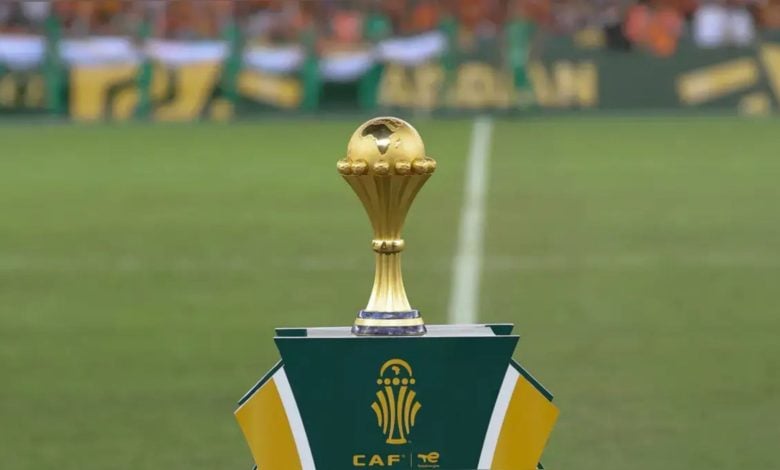
The Confederation of African Football (CAF) has reversed its earlier decision to hold the Africa Cup of Nations (AFCON) every four years, restoring the competition to its traditional two-year format.
The decision was taken unanimously by CAF’s Executive Committee (EXCO), following a reassessment of the proposed changes to the continent’s football calendar.
CAF President, Dr Patrice Motsepe, had announced at the CAF Strategy Conference in Cabo Verde, held from October 7 to 9, 2026, that the organisation’s executive committee would reconsider its previous decision to move AFCON from a two-year to a four-year cycle.
The reconsideration followed concerns about the proposed Africa Nations League, which was initially expected to replace the existing AFCON format and provide a major pan-African competition every two years.
According to CAF, the proposed competition would require several years before it could generate the substantial financial resources needed to support African football and make the continent’s competitions globally competitive and financially self-sustaining.
Explaining the latest decision, Motsepe said the committee’s priority was to protect the interests of African football, CAF’s 54 member associations and African players employed by football clubs outside the continent.
He said, “The decision by the CAF EXCO that the CAF AFCON should take place every Two Years was based on advancing, protecting and promoting the interest of African Football and CAF’s 54 Member Associations, as well as the interest of African players employed by Football Clubs outside Africa.”
The CAF president added that the organisation was concerned about the time required for the proposed Africa Nations League to make meaningful financial and football development contributions.
He expressed confidence that returning to the traditional AFCON schedule would contribute significantly to the development and growth of football across the continent.
Motsepe also confirmed that the next TotalEnergies CAF Africa Cup of Nations would take place in 2027, with Kenya, Tanzania and Uganda jointly hosting the competition.
He said the subsequent editions would take place in 2028, 2031 and 2033.
The decision to schedule the 2031 and 2033 editions also takes into consideration the 2030 FIFA World Cup, as CAF explained that, in line with FIFA’s tradition, the final tournament of AFCON and other confederation-level national team competitions would not take place during the year of the World Cup.
Motsepe described AFCON as more than a football tournament, noting that the competition provides an opportunity to celebrate the continent’s diverse cultures, customs and traditions while bringing people together.
He said the tournament connects people from Africa’s 54 countries, the African diaspora and other parts of the world.
The CAF president maintained that the decision was in the best interest of African football and its member associations, adding that it would strengthen the continent’s football development and competitiveness.
The latest announcement comes amid controversy surrounding the 2025 AFCON final, which has remained a major talking point in African football.
Senegal initially won the tournament after defeating host nation Morocco 1-0 in the final played on January 18, 2026.
However, the match was overshadowed by controversy after Senegal’s players temporarily walked off the pitch following the award of a stoppage-time penalty to Morocco when the score was still goalless.
The Senegalese players eventually returned after a delay of approximately 17 minutes, but Morocco’s Brahim Diaz failed to convert the penalty as his effort was saved.
Senegal subsequently secured victory in extra time through Pape Gueye, appearing to have won the continental title.
However, the Confederation of African Football later overturned the result following an appeal by the Moroccan Football Federation.
CAF’s appeal board ruled that Senegal had forfeited the final because of the conduct of its players, recording the match as a 3-0 victory in favour of Morocco.
In its explanation, CAF stated that Senegal had violated Article 82 of the AFCON regulations by leaving the field of play before the conclusion of the match without the referee’s authorisation.
Article 82 provides that a team that refuses to play or leaves the pitch before the end of regulation time without the referee’s permission may be considered to have forfeited the match.
Article 84 further provides for the team to be eliminated and the match recorded as a 3-0 defeat.
CAF consequently upheld Morocco’s appeal, declaring the North African country the winner of the 2025 AFCON.