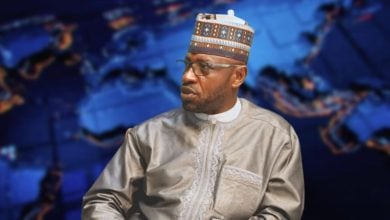
Atiku Accuses Kaduna Govt Of Sealing Venue For Northern Stakeholders’ Meeting

Former Vice-President Atiku Abubakar has accused the Kaduna State Government of deliberately obstructing the African Democratic Congress (ADC) by sealing Arewa House, the proposed venue for his meeting with Northern stakeholders scheduled for Thursday.
Atiku, the ADC presidential candidate for the 2027 general election, described the action as an affront to the culture and dignity of the people of Northern Nigeria.
This was contained in a statement issued on Wednesday by Phrank Shaibu, Director of Strategic Communications of the ADC Presidential Campaign Council.
According to the statement, the Kaduna State Government sealed the historic building shortly after the party proposed it as the venue for Atiku’s consultation with Northern stakeholders.
Atiku said, “My campaign team had proposed the Arewa House as the venue for our consultation with stakeholders on Thursday and, today, the APC government decided to seal the building.”
The former vice-president linked the development to what he described as a pattern of attempts by the All Progressives Congress (APC)-led government to frustrate the opposition’s political activities.
He cited the party’s campaign flag-off in Sokoto, alleging that the state government had also attempted to frustrate the event.
The ADC accused President Bola Tinubu and the APC of using public authority to undermine democratic competition and restrict opposition activities.
It said, “We hold President Bola Tinubu and the APC politically responsible for this pattern of obstruction. An outgoing president and a ruling party should respect democratic competition, not use public authority to impede the opposition, restrict political consultation or weaken Nigerians’ right to choose.”
The party, however, vowed not to be intimidated, expressing appreciation to Nigerians for their support and solidarity.
The development comes amid the leadership crisis rocking the ADC following a November 5 judgment of the Federal High Court in Abuja, which nullified the emergence of the Senator David Mark-led leadership of the party.
Politics Nigeria reports that the judgment, delivered by Justice Peter Lifu, also invalidated decisions taken under the leadership and affected the process that produced Atiku as the party’s presidential candidate.
In the statement, the ADC expressed concern over the release of the duly authenticated copy of the judgment on Wednesday, the final day of the seven-day constitutional period for providing parties with authenticated copies.
It argued that the timing left the party with limited time to study the ruling and determine its next legal steps.
This was as the party cited Section 294(1) of the 1999 Constitution, which requires courts to furnish parties with duly authenticated copies of their decisions within seven days of delivery.
The ADC said it would study the judgment and pursue all available legal remedies, adding that it had rejected the ruling and filed an appeal alongside an application for a stay of execution.
Meanwhile, the Independent National Electoral Commission (INEC) has said it will not take any decision on the ADC leadership crisis until it receives and examines the certified true copy of the court judgment.
INEC National Commissioner and Chairman of its Information and Voter Education Committee, Mohammed Haruna, disclosed this on Wednesday during a webinar organised by the PUNCH Media Foundation.
Haruna explained that the commission needed to study the ruling and obtain legal advice before determining its position on the party’s leadership.
He said INEC had initiated steps to obtain the certified true copy but could not compel the court to release the document immediately.
“We can’t rush the courts, but we do our own part. We have a whole legal department. As soon as judgments like this come, what they do, of course, is to go to the courts, to go to the court registry, to see if they can obtain it. But they have their own processes,” he said.
Haruna noted that obtaining a certified true copy of a judgment usually takes about a week.
He added that once the document was received, INEC’s litigation department would examine it and advise a committee chaired by a national commissioner before recommendations were forwarded to the commission for a final decision.
“So, as soon as we get it, we run a committee system. The department, which is in charge of litigation will look into it, then they will advise. There is a committee which is chaired by a national commissioner. They, in turn, will advise the Commission itself, and then the Commission will take a decision on exactly what to do,” he said.
The INEC commissioner maintained that the commission could not take any decision on the matter without first obtaining the official court document.
“So, for now, until we receive that certified true copy, there’s really nothing that we can do about it,” he added.