US Missionary Quotes Quran to Condemn Nigerian Govt Over Attacks on Christians in Jos
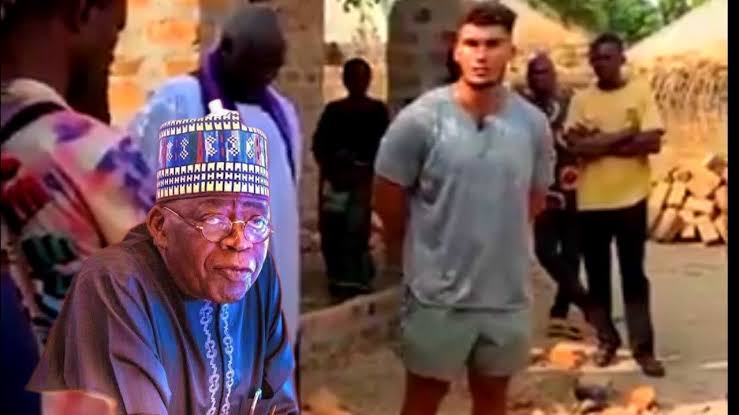
An American missionary has stirred fresh controversy after openly criticising the Nigerian government over the recurring killings in Plateau State.
The missionary, Alex Barbir, accused President Bola Tinubu of failing to act, following a deadly Palm Sunday attack in Jos North Local Government Area.
Barbir, who is based in Florida and leads a group known as Building Zion, spoke in a video recorded in Plateau State. In the clip, he condemned the continued violence against Christians.
He referenced Islamic texts, including Surah 9:29 and certain hadiths, while pointing to the “Allahu Akbar” chants reportedly heard during attacks.
His comments came shortly after gunmen invaded Anguwan Rukuba in Jos North. The attackers, said to be dressed in military uniforms, opened fire on residents in the evening. At least 12 people were killed, with several others injured.
Eyewitnesses described the attack as sudden and chaotic. A resident, Nyam Isaac, said the gunmen stormed a busy area around 8 pm and began shooting at people without warning. He added that many victims were caught off guard in what appeared to be a market setting.
In his reaction, Barbir did not hold back. He said, “In Rukuba, they just murdered over 10 people, innocent Christians, on Palm Sunday.” He then addressed President Tinubu directly.
“Tinubu, where are you as your people are slaughtered in the night? As you are sitting in Aso Rock, you are doing absolutely nothing. You allow your people to be killed again and again.
“When will it stop? When will you hear the cries of Nigerians, of Christians? You can no longer deny genocide. They are being slaughtered, and you said there is no issue. You will regret what you are doing.”
The video has since triggered mixed reactions online. While some Nigerians supported his position, others, particularly Muslim users, criticised his remarks. They accused him of promoting hate speech and misrepresenting Islamic teachings. Some also questioned his activities in the country and alleged links to militia groups, claims that remain unverified.
Barbir is known for humanitarian efforts in conflict-hit communities. Reports indicate that he has helped rebuild about 35 homes for victims of attacks in Benue State, especially in areas affected by suspected Fulani militia violence.
Following the Jos incident, authorities imposed a 48-hour curfew in parts of Plateau State to contain rising tension. Security presence has also been increased across affected communities.
Reacting to the development, Barrister Aloy Ejimakor, counsel to the detained leader of IPOB, Nnamdi Kanu, said the killings show the need for a new approach to Nigeria’s security challenges.
“The Palm Sunday massacre of Christians in Jos, Nigeria (by Islamists) underscores the urgency of creating a ‘sovereign safe zone’ for Christians in Nigeria.
“This is the only permanent & sensible solution to the unbridled carnage/terror that has convulsed Nigeria to no end & martyred thousands of Christians.
“And it’s on record that this is the solution the Biafrans had long suggested, but instead of considering it, the Government of Nigeria resorted to renditioning & imprisoning Mazi Nnamdi Kanu for life.”
He also called on international leaders to intervene in the situation.
“That said, it has now become more urgent & compelling for the comity of nations & world leaders, especially Donald Trump & Keir Starmer, to prevail on President Bola Tinubu, to free Mazi Nnamdi Kanu & initiate prompt steps towards achieving a permanent solution that will create a space where Christians would have the sovereign right to defend themselves & their territory.”
Jos and other parts of Plateau State have witnessed repeated violence over the years. These conflicts are often linked to land disputes, ethnic tensions, and religious differences.
Despite official claims that the attacks are not targeted along religious lines, many residents continue to insist otherwise.
Nonetheless, the latest incident has once again brought national attention to the fragile security situation in Nigeria’s Middle Belt.