
Nigerian Military Breaks Silence on Claims of Terrorists Being Recruited into the Army
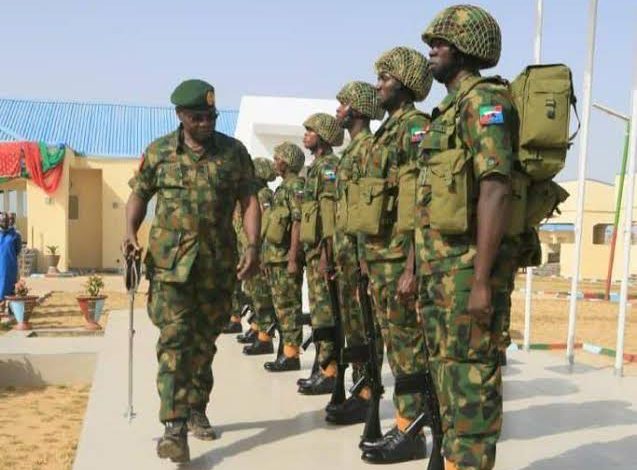
The Defence Headquarters (DHQ) has dismissed reports suggesting that repentant terrorists are being secretly absorbed into the Nigerian military.
The military described the claim as false and misleading and it insisted that no such practice exists within its ranks.
According to officials, the armed forces maintain strict standards and cannot compromise on recruitment rules.
He made it clear that individuals with violent backgrounds are not considered for enlistment.
“We are not recruiting any killers into the army, and we can never do that,” he said, stressing that the military remains guided by discipline and integrity.
The military noted that those who surrendered and went through rehabilitation are unlikely to return to terrorist groups.
Many of them, according to officials, would face execution if they attempted to rejoin the insurgents, who often view them as informants.
These are mostly people who were forced into insurgency or joined under threat. Many, he added, escaped when they had the chance.
He further clarified that the Nigerian Army operates a strict recruitment system. Anyone with a criminal record is automatically disqualified. This applies across all security agencies. The military, he said, cannot afford to lower its standards, especially in the fight against terrorism.
Operation Safe Corridor, according to him, is not a recruitment platform. He described it as a structured programme designed to deradicalise and reintegrate former insurgents into society.
The initiative began around 2015 at the peak of the Boko Haram crisis in the North-East. It was created to manage the increasing number of fighters who surrendered during military operations.
The programme involves several government bodies. These include the Ministry of Justice and other local and international partners. Together, they assess each individual and place them into categories based on their level of involvement.
Low-risk individuals are those with no serious offences. Medium-risk participants may have limited involvement, while high-risk individuals include core fighters and commanders.
Only the low-risk group is admitted into the rehabilitation process. Officials say these individuals have no pending legal cases. Within the programme, they undergo psychological counselling and deradicalisation sessions. Many of them arrive with deep trauma and, in some cases, drug addiction.
They are also given vocational training. Skills such as tailoring, carpentry, and agriculture are taught to help them rebuild their lives. The goal, according to the military, is to ensure they return to society as productive citizens.
Brigadier General Alli stressed that the initiative does not replace the justice system. He said hardened terrorists captured during operations are prosecuted in court. Those found guilty are jailed. He described the approach as a balanced system that combines justice with rehabilitation.
“The programme operates on a dual-track system: criminal justice for offenders and rehabilitation and reintegration for victims,” he said.
The Defence Headquarters maintained that Operation Safe Corridor remains a key part of efforts to end insurgency. It added that the programme is focused on peace-building and preventing a return to violence, not military recruitment.


🥴🥱👎👎👎