Nigeria, 39 Nations Hold Urgent Talks Over Hormuz Strait Closure Amid M-East Crisis
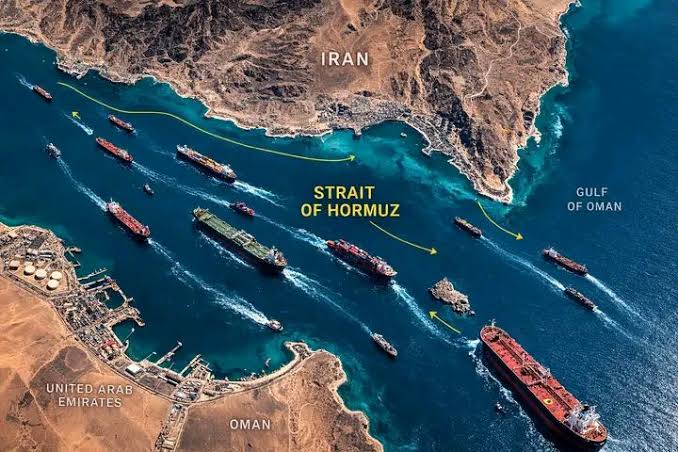
Nigeria joined 39 other countries in an emergency virtual meeting on Thursday to address the growing crisis surrounding the Strait of Hormuz.
The talks focused on restoring safe passage through the vital oil shipping route, which has been severely disrupted following Iran’s actions in the region.
The meeting was convened by British Prime Minister Keir Starmer amid rising global concern over the blockade.
Tensions have escalated sharply in the Middle East, with fears that continued disruption could destabilise international oil supply and worsen economic conditions worldwide.
The Strait of Hormuz remains one of the most critical waterways for global energy transport. Recent attacks on commercial vessels and threats of further strikes have forced shipping activities to a near halt. This has triggered a sharp rise in oil prices and heightened anxiety across global markets.
Countries that took part in the meeting included major global powers such as the United Kingdom, France, Germany, Italy, Canada, Japan, and the United Arab Emirates. Others were Sweden, Norway, Denmark, Estonia, Latvia, Lithuania, Bahrain, Panama, and Nigeria, among several others.
The United Kingdom’s Foreign Secretary, Yvette Cooper, who presided over the meeting, criticised what she described as “Iranian recklessness” and warned that the situation now threatens global economic stability.
She disclosed that more than 25 attacks have been recorded on vessels in the area, leaving about 20,000 seafarers stranded across roughly 2,000 ships.
Prime Minister Starmer also indicated that military planners from several countries would soon meet to develop a coordinated approach for post-conflict security in the region. He admitted that reopening the shipping lane would be complex and would require both military readiness and sustained diplomatic engagement.
France, however, expressed caution over the idea of military intervention. President Emmanuel Macron stated that forcing the strait open through military action would not be realistic at this stage. He suggested that any lasting solution must involve dialogue with Iran, particularly after a ceasefire is achieved.
Meanwhile, Iran has maintained a defiant stance. Its military warned of “more crushing, broader and more destructive” attacks in response to threats from the United States and its allies. Officials insisted that the conflict would continue until their opponents are forced into what they described as “permanent regret and surrender.”
In a related development, the Gulf Cooperation Council has called on the United Nations Security Council to authorise the use of force to secure the Strait of Hormuz. The group accused Iran of obstructing commercial vessels and imposing restrictions on maritime movement.
Bahrain has already submitted a draft resolution seeking approval for countries to take “all necessary measures” to guarantee free navigation.
However, the proposal has sparked divisions within the Security Council, with Russia, China, and France reportedly opposing the move despite revisions to the document.
At the same time, diplomatic efforts appear to be ongoing behind the scenes. Reports indicate that Iran is working on a new agreement with Oman to monitor traffic in the strait.
The proposed arrangement could introduce a fresh navigation framework, although details remain unclear.
The situation continues to evolve, with global attention fixed on the Strait of Hormuz as both diplomatic and military options remain on the table.