US President, Trump Orders U.S. Navy Blockade Of Hormuz After Talks Collapse
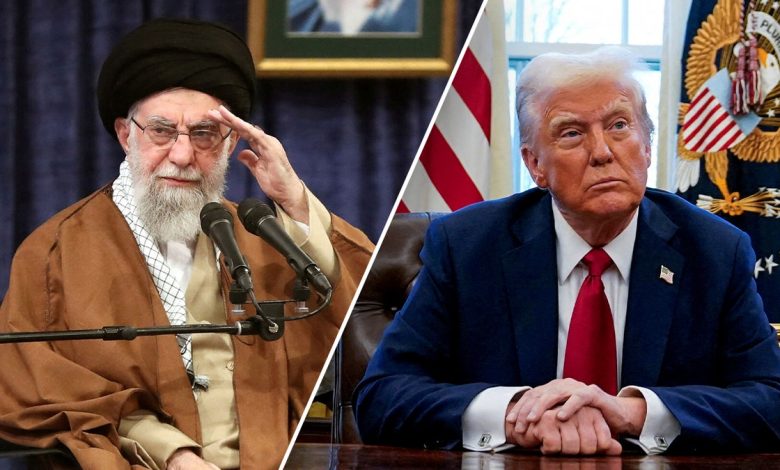
United States President Donald Trump has ordered the U.S. Navy to immediately begin blockading the Strait of Hormuz, in a dramatic and potentially far-reaching escalation following the collapse of high-stakes peace talks with Iran in Islamabad, Pakistan on Sunday.
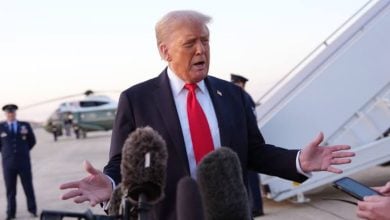
In a post on Truth Social, Trump wrote: “Effective immediately, the United States Navy, the Finest in the World, will begin the process of BLOCKADING any and all Ships trying to enter, or leave, the Strait of Hormuz.” He added that he had instructed the Navy to seek and interdict every vessel in international waters that had paid a toll to Iran, warning that any Iranian who fires at American or peaceful vessels would face severe consequences.
The announcement came hours after the Islamabad talks, which had been billed as a historic first direct high-level engagement between the two nations in decades, ended without a breakthrough.
Trump acknowledged the meeting had gone reasonably well overall but said the one issue that truly mattered— Iran’s nuclear programme, remained unresolved.
Sources briefed on the talks said the breakdown centred on two core sticking points: Iran’s insistence on retaining control of the Strait of Hormuz and its firm refusal to surrender its enriched uranium stockpile.
Iran’s Parliamentary Speaker Mohammad Baqer Ghalibaf, who led the Iranian delegation in Islamabad, placed the blame squarely on Washington for the failure, saying American officials had failed to gain the trust of the Iranian side throughout the negotiations.
The Strait of Hormuz is one of the world’s most critical economic chokepoints, handling roughly one-fifth of global oil and liquefied natural gas shipments daily. Since the crisis began, Iran has effectively controlled access to the waterway, limiting the number of vessels permitted to cross and charging ships for passage.
The restrictions have sent energy prices soaring, with both Brent crude and WTI climbing past $115 per barrel at their peak, straining economies across Asia and Europe and disrupting global supply chains.
Just a day earlier on Saturday, the U.S. Navy stated they had began mine-clearing operations in the strait, with two guided-missile destroyers, USS Frank E. Peterson and USS Michael Murphy, transiting the waterway as part of a broader effort to clear mines CENTCOM alleges were laid by Iran’s Islamic Revolutionary Guards Corps.
Trump framed Sunday’s blockade as a direct response to what he described as world extortion, insisting that Iran would not be permitted to impose any form of restriction on international shipping passing through the strait.
The announcement also comes against the backdrop of Israeli Prime Minister Benjamin Netanyahu’s declaration on Saturday that Israel’s military campaign against Iran is far from over, ceasefire notwithstanding.
Netanyahu made clear that Israel reserves the right to continue pursuing its own military objectives independently of any U.S.-Iran diplomatic arrangement, adding further complexity to an already volatile regional picture.
Analysts warn that Trump’s blockade order could dramatically inflame tensions in the region, with the risk of direct military confrontation between U.S. and Iranian forces now significantly elevated.
Global energy markets are expected to react sharply when trading opens, with oil prices likely to spike further on news of the escalation.
Shipping companies and insurers have already been grappling with soaring risk premiums in the region for weeks.
Iran has not yet issued a formal government response to the blockade order, and the Pentagon had not commented at the time of this report.