Petrol Marketers Reject World Bank’s Cheaper Fuel, Back Dangote Refinery
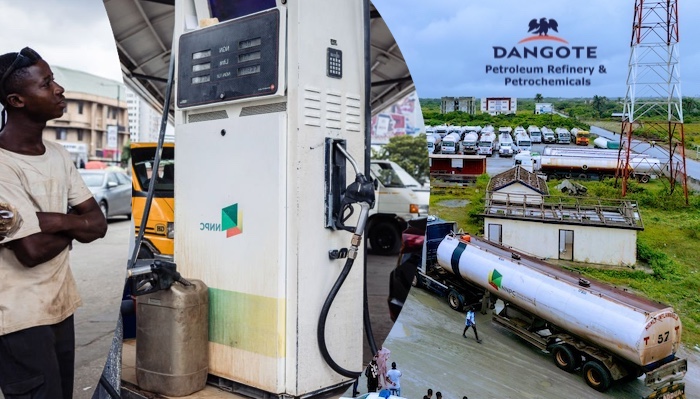
Petroleum marketers and industry experts in Nigeria have pushed back against recent claims by the World Bank that imported petrol is cheaper than locally refined fuel.
They insist that strengthening domestic refining, especially through the Dangote Refinery, remains the best path for the country.
The reaction follows the bank’s Nigeria Development Update released on April 7, where it advised the Federal Government to prioritise fuel imports.
The report suggested that imported Premium Motor Spirit (PMS) could offer lower costs compared to locally refined products.
The position sparked immediate backlash across the oil and gas sector. Days later, the World Bank quietly removed the report from its website and issued a clarification. It stated that its recommendation was not a blanket endorsement of fuel importation but part of a broader reform strategy.
“In the case of Nigeria, the focus should be to provide targeted support to the most vulnerable people through their well-functioning social safety net system, and the World Bank Group stands ready to step up its existing support,” the institution said.
Despite the clarification, stakeholders in Nigeria’s downstream sector have continued to fault the initial advice.
Many argue that the recommendation does not reflect current realities, especially amid global supply disruptions linked to tensions involving Iran, the United States, and Israel.
Chief Executive Officer of the Centre for the Promotion of Private Enterprise, Muda Yusuf, described the proposal as counterproductive. He warned that increasing imports could weaken local investments and discourage refinery growth.
Similarly, the spokesperson of the Crude Oil Refinery-Owners Association of Nigeria, Eche Idoko, raised concerns over the quality of imported fuel. He argued that locally refined products are better suited for the Nigerian market.
However, the Petroleum Products Retail Outlets Owners Association of Nigeria, led by Billy Gillis-Harry, took a different stance. The group backed the World Bank’s position, saying increased importation could improve competition in the sector.
But this view appears to contrast with the “Nigeria First” approach being promoted by President Bola Ahmed Tinubu, which prioritises local production and economic self-reliance.
Speaking further on the issue, energy expert Dr. Tim Okon criticised the influence of foreign institutions on Nigeria’s policy direction. He argued that the country’s borrowing history has given organisations like the World Bank undue leverage.
“Why should the view of the World Bank be this important? It has become important because we have borrowed too much from them,” he said, describing the recommendation as “an unnecessary theory.”
Okon stressed that Nigeria should focus on building a flexible domestic fuel system. According to him, different fuel grades should be made available to meet varying consumer needs instead of relying on imports.
On his part, the President of the Independent Petroleum Marketers Association of Nigeria (IPMAN), Abubakar Maigandi, urged both marketers and the government to ignore calls for increased importation.
“Well, in fact, you know Dangote has a refinery. And we rely on that particular refinery because that’s what we are looking for over the years. So, we are not telling anybody to go for importation,” he said.
He added that supporting the Dangote Refinery would encourage more investors to enter the sector and boost local capacity.
“We are saying people should be patronizing Dangote. Yes, so that other refineries that are coming can start doing business. Fuel import will not be good at all for the Nigerian economy,” he said.
Maigandi also disclosed that petrol from the refinery currently sells at around N1,200 per litre, describing it as both competitive and of high quality.
He maintained that relying on local refining remains the most sustainable solution for Nigeria, given its abundant crude oil resources.