
Presidency Clarifies Tinubu’s Involvement in US FBI, Drug Records Case
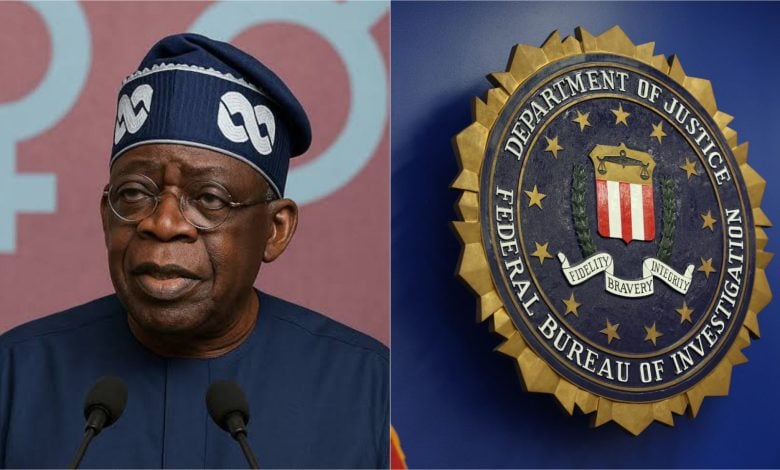
The Presidency has clarified President Bola Ahmed Tinubu’s involvement in an ongoing Freedom of Information Act (FOIA) case before a United States federal court.
According to the presidency, the matter is a civil dispute over access to government records and does not amount to a criminal case against the Nigerian president.
The clarification was contained in a statement issued on Thursday by Bayo Onanuga, Special Adviser to the President on Information and Strategy, amid renewed public attention to records held by United States law enforcement agencies, including the Federal Bureau of Investigation (FBI) and the Drug Enforcement Administration (DEA).
The Presidency said recent reports and public commentary had created the impression that Tinubu was facing criminal proceedings in the United States, stressing that this was not the case.
“For clarity, the matter is a civil records-disclosure dispute under the United States Freedom of Information Act. It is not a criminal case against President Bola Ahmed Tinubu, nor has the court found him guilty of any criminal wrongdoing,” the statement said.
The case is before the United States District Court for the District of Columbia and centres on requests for records relating to Tinubu that were submitted to several American government agencies.
According to the Presidency, the matter dates back to 2022 when Aaron Greenspan filed FOIA requests seeking records relating to Tinubu. After some agencies withheld records or declined to confirm or deny whether particular records existed, Greenspan commenced Civil Action No. 23-1816 before the Washington, D.C. federal court in 2023.
Onanuga said President Tinubu was subsequently allowed by the court to participate in the case as an intervenor.
The Presidency also referred to a February 4, 2003 letter from the American Consulate in Lagos to the then Inspector General of Police, Tafa Balogun, stating that an FBI records check had found no criminal arrest records, wants or warrants for Tinubu, who was then a former governor.
A major part of the current dispute concerns records held by the FBI and DEA and the extent to which those records can legally be disclosed to the public, he said.
The Presidency explained that several US government agencies initially relied on what is known as the “Glomar defence”, a legal position under which an agency may decline to confirm or deny the existence of particular records or an investigation where doing so could reveal protected law enforcement information.
The court, he said, subsequently granted summary judgment in favour of the CIA, the Executive Office for United States Attorneys, the Department of State, the Department of the Treasury and the Internal Revenue Service, removing those agencies from the proceedings.
The remaining aspects of the dispute involve the FBI and DEA.
The Presidency said the two agencies, in compliance with court orders, produced 399 pages of records, although portions were redacted under exemptions contained in US law. Greenspan challenged the redactions and sought access to the withheld portions.
The FBI and DEA, through the United States Department of Justice, opposed the request, arguing that some of the material could not legally be disclosed.
According to the Presidency, the reasons include protections covering grand jury proceedings and certain court orders, attorney-client and attorney-work product privileges, law enforcement records, personal privacy and information that could identify confidential sources or reveal investigative techniques.
The statement said Tinubu had also asserted his rights under FOIA Exemption 7(C), which protects certain personal information from disclosure where release could constitute an unwarranted invasion of personal privacy.
“The release or withholding of records under FOIA does not, by itself, establish criminal liability,” the Presidency said. “The case concerns access to government records and the proper application of statutory exemptions.”
The clarification comes against the background of renewed lobbying activity in Washington by Von Batten-Montague-York, L.C., a Republican policy advisory and lobbying firm that has publicly raised allegations concerning Tinubu and an old US investigation involving suspected heroin trafficking.
The firm recently said it had begun contacting members of the US Congress and senior congressional staff over the records involved in the FOIA litigation.
“Members of Congress and senior congressional staff returned to Washington today, and we wasted no time,” the firm said in a statement posted on its verified X account.
It said it had “immediately began reaching out to our friends on Capitol Hill” to brief them on the matter.
The lobbying firm has argued that the allegations should not be viewed merely as an issue in Nigerian domestic politics because the records involve American law enforcement agencies and could have implications for US foreign policy, intelligence cooperation, law enforcement collaboration and counter-narcotics policy.
The company also questioned whether Tinubu should be viewed by American policymakers as “a strategic asset or an increasing national-security liability.”
However, the Presidency rejected attempts to portray the lobbying firm’s activities as an official position of the United States government.
In an earlier response, Special Adviser to the President on Media and Public Communications, Sunday Dare, described the statements coming from the firm as politically motivated and said they should not be mistaken for the position of Washington.
“The incendiary press releases being carefully churned out from Washington are public relations propaganda sheets passed off as the view of the U.S. Government. They are not,” Dare said.
He also challenged the lobbyists to produce evidence for allegations they had presented as intelligence.
“Sane minds must categorically dismiss these reports as fabricated, politically motivated, and entirely unsupported by evidence. The report presents no intelligence document, no named Western official, and no evidence of any exchange involving Nigeria’s secrets or resources,” Dare said.
He added, “It is nothing more than political speculation packaged as classified information. We demand that they produce the so-called ‘highly classified intelligence report,’ identify their unnamed sources, and provide tangible evidence for their wild allegations.”
Dare further stated that comments by Karl Von Batten, the founder of the lobbying firm, should not be interpreted as representing the Trump administration.
“Dr. Karl Von Batten’s comments represent solely the position of an individual associated with Atiku-linked political interests, not the U.S. government or President Trump,” he said.
The dispute has also revived attention on a 1993 civil forfeiture proceeding in Chicago involving about $460,000 linked to accounts associated with Tinubu. The money was forfeited to the US government, but the proceeding was civil in nature and did not result in a criminal conviction against Tinubu.
Tinubu has consistently denied wrongdoing and has not been convicted of drug trafficking in the United States.
His US legal team has also defended the decision to challenge the release of portions of the FBI and DEA records, arguing that the lawyers are exercising rights provided under American law rather than attempting to conceal evidence of criminal conduct.
Senior Advocate of Nigeria Wole Afolabi, who is part of Tinubu’s legal team in the United States, said the lawyers would be failing in their professional duty if they did not rely on protections available under US law.
“So precisely what we are doing is going under the coverage of the law. It’s what the law gives us the right to do. It would amount to professional malpractice on our part if we don’t take advantage of what the law offers,” Afolabi said.
He also argued that the historical forfeiture proceeding should not be treated as proof of a criminal conviction.

“If he was culpable, he simply would have been indicted. There’s no shortcut around it. He would have been indicted,” Afolabi said.
The lawyer added that the existence of an investigation or a person’s appearance in investigative records should not automatically be interpreted as proof of guilt.
“Anyone can be a subject of investigation. That’s just how it goes. I mean, there’s a presumption of innocence,” he said.
The latest development follows the submission of additional FBI records to Judge Beryl A. Howell for private examination on August 28. The FBI did not publicly release the documents, instead submitting them “under seal, ex parte, in camera” for the judge to review.
The FBI has argued that publicly explaining the basis for some of its redactions could expose information protected by US law.
In an earlier filing, the agency said, “The FBI has determined that it cannot provide on the public record the full basis for the application of Exemptions 7(E) and 7(F) to certain withholdings and that, therefore, an ex parte, under seal declaration is necessary.”
The Presidency stressed that the next stage of the case will be determined by the US court and not by political statements made in Nigeria or Washington.
It said Greenspan has until September 11, 2026, to file his opposition and reply to processes filed by the defendants and Tinubu as an intervenor, while the FBI, DEA and the president have until September 18 to respond to any processes filed by him.
“The United States District Court will decide that issue based on the filings and applicable US law, not political commentary,” the Presidency said.
It urged Nigerian media organisations and members of the public to distinguish between verified court proceedings and political claims surrounding the case, maintaining that the central legal question before the court is whether the FBI and DEA acted lawfully in withholding or redacting portions of the records.
The Presidency also rejected claims that Atiku Abubakar or Karl Von Batten is central to the litigation, saying neither is a party to the case.
The court, it said, remains the authority that will determine whether the disputed records should remain withheld, be released in full or be disclosed with portions redacted.


4 Comments