2027: Peter Obi’s Ally Rules Out APC, ADC Victory in Kano
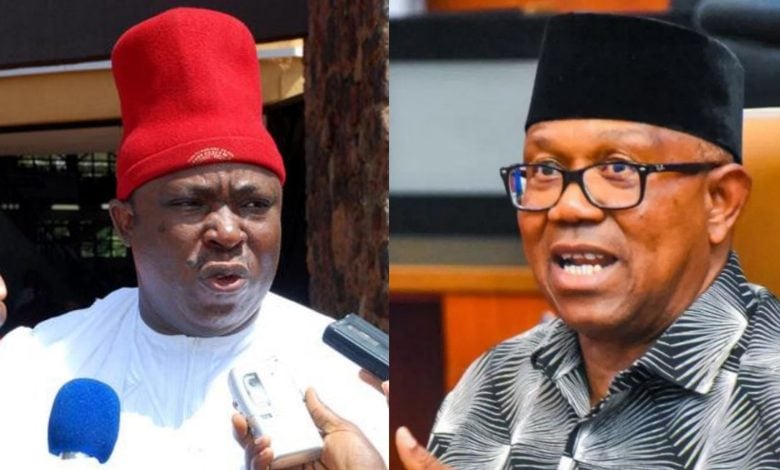
The lawmaker representing Anambra Central Senatorial District, Senator Victor Umeh, has declared that the African Democratic Congress (ADC) and the All Progressives Congress (APC) cannot defeat Nigeria Democratic Congress (NDC) vice-presidential candidate, Rabiu Musa Kwankwaso, in Kano State in the 2027 general elections.
Umeh, a chieftain of the NDC and political ally of the party’s presidential candidate, Peter Obi, expressed confidence in Kwankwaso’s electoral strength in Kano, and insisted that the former governor would prevail if the election was conducted transparently.
The senator spoke on Friday during an interview on Channels Television’s Politics Today, where he also discussed the NDC’s preparations for the 2027 elections and the party’s proposed mechanism for protecting votes.
He said, “No matter the noise they make in Kano, nobody can beat Kwankwaso there once the election is credible, transparent, free, and fair. I can bet it.”
Umeh said he had been working closely with Kwankwaso and other NDC leaders, adding that the party was positioning itself to mount a strong challenge in 2027.
He also pointed to the growing support for Peter Obi and other NDC candidates as evidence of the party’s expanding political influence.
According to him, the large crowd that welcomed Obi during his recent engagement in Port Harcourt demonstrated that Nigerians were increasingly identifying with the party and its candidates.
“Those people following them in Port Harcourt last week are Nigerians that will vote. Why were they following our presidential candidate, Peter Obi, like Jesus was crossing, and people were marching around him? Something must be motivating and driving the people, the voting population,” he said.
Umeh also clarified that the NDC was not planning to establish a parallel result collation system for the 2027 elections, contrary to concerns raised over the party’s proposed election-monitoring arrangement.
He explained that NDC agents would be deployed to polling units to obtain results after they had been properly collated, declared and entered into the prescribed result forms, before transmitting the figures to the party’s situation room.
“No, it is not. What makes it parallel?” Umeh asked when questioned about the arrangement.
He added, “You must send the results of the polling units to the NDC situation room. INEC has no monopoly of collation of data.”
The senator stressed that the party’s objective was to independently monitor the electoral process and protect votes, rather than interfere with the statutory responsibilities of the Independent National Electoral Commission.
He further called on INEC to strengthen its workforce ahead of the 2027 elections by recruiting and training more permanent personnel while reducing its dependence on ad hoc workers.
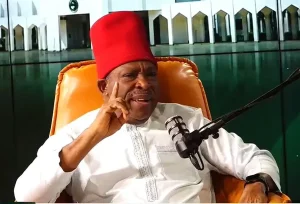
Umeh argued that excessive reliance on temporary electoral officials could undermine public confidence, particularly where personnel were moved between states for electoral assignments.
He alleged that attempts were sometimes made to deploy ad hoc staff capable of favouring powerful interests during elections.
“When election comes, efforts are made to put ad hoc staff that will serve the purpose of certain powerful people in various locations,” he alleged.
While commending INEC for its ongoing recruitment exercise, Umeh urged the commission to use the opportunity to expand its permanent manpower and train its officials to serve as collation and returning officers.
He said permanent INEC personnel would be more accountable than temporary workers recruited specifically for elections.
“INEC should be able to have its own trained personnel to be collation officers and be returning officers, so that anything that happens starts and ends with INEC,” he said.
Umeh also urged relevant authorities to prosecute electoral offenders, insisting that credible elections would require stronger institutional safeguards to ensure that votes cast by Nigerians are accurately counted and protected.