INEC Moves to Stop Atiku’s Bid to Disqualify Tinubu from 2027
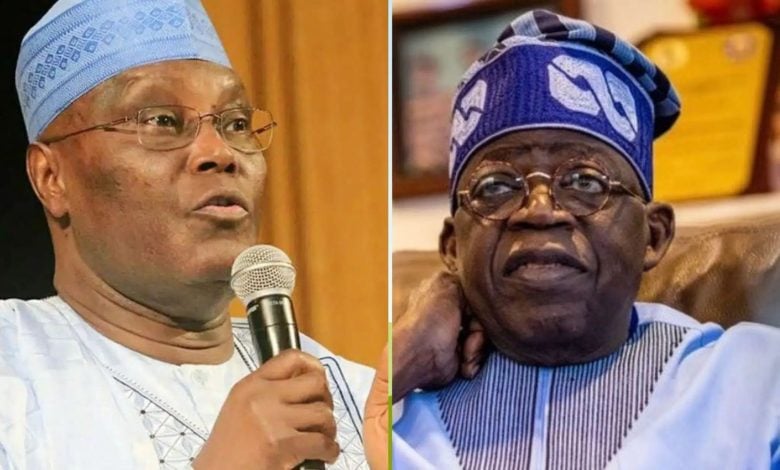
The Independent National Electoral Commission, INEC, has moved against an attempt by former Vice President Atiku Abubakar and the African Democratic Congress, ADC, to amend their suit seeking the disqualification of President Bola Tinubu from the 2027 presidential election.
The electoral commission is asking the Federal High Court in Abuja to reject the amendment sought by Atiku and the ADC in the legal battle over Tinubu’s National Youth Service Corps, NYSC, discharge certificate.
This case is centred on allegations by Atiku and the ADC that a disputed NYSC certificate was submitted to INEC in connection with Tinubu’s qualification to contest the presidency.
Atiku and the ADC had approached Justice Inyang Ekwo with a suit marked FHC/ABJ/CS/1888/2026.
They joined Tinubu, the All Progressives Congress, APC, and INEC as the first, second and third defendants respectively.
The plaintiffs want the court to declare Tinubu and the APC ineligible to participate in the 2027 presidential election.
They are also asking the court to direct INEC to remove the President’s name and that of the APC from the list of candidates and political parties for the election.
However, INEC has now raised several objections to the case and the latest attempt by the plaintiffs to amend their originating summons.
In a preliminary objection filed on September 7 through its counsel, Dr Alex Izinyon, SAN, the commission challenged the competence of the suit.
INEC argued that the action was statute-barred. It also questioned the legal standing of Atiku and the ADC to bring the case.
The commission further argued that the suit disclosed no reasonable cause of action and amounted to an abuse of court process.
Beyond those objections, INEC said the plaintiffs failed to comply with a mandatory requirement under Paragraph 7(1) of the Federal High Court Pre-Election Practice Directions (Amendment) 2026.
The commission also challenged the propriety of some of the reliefs being sought by Atiku and the ADC.
It consequently urged the court to dismiss the case.
The latest development followed an application by Atiku and the ADC seeking permission to amend the originating summons filed when the case was commenced.
The plaintiffs said they discovered some errors in the documents after filing the suit on August 14.
One of the issues they identified was the description of an INEC form attached to their affidavit.
They initially referred to the document as Form CF001 but later stated that the relevant form is now known as Form EC9A.
Atiku and the ADC also said they wanted to provide more details about the alleged fraud contained in their case.
They sought to include Atiku’s written deposition and clearer copies of exhibits referenced in the original filing but which were not available to them when the suit was initially filed.
They therefore asked the court to grant them leave to amend the originating summons and deem the amended document as properly filed.
INEC has opposed that move.
The commission’s position adds another legal hurdle to Atiku’s attempt to have the court examine Tinubu’s eligibility ahead of the 2027 election.
The President and the APC have also mounted a separate challenge to the case.
In a joint counter-affidavit filed on September 9, Tinubu and the APC asked the court to dismiss the suit in its entirety.
They denied submitting any forged certificate to INEC for either the 2023 or 2027 presidential elections.
The defendants also disputed the claim that Tinubu submitted Form CF001 to INEC in the manner alleged by Atiku and the ADC.
Through the APC Director of Legal Services, Sanusi Samaila, they maintained that the NYSC had never denied issuing a discharge certificate to Tinubu at the end of his service.
The defence further argued that an allegation of forgery could not simply be established by questioning the details appearing on a certificate.
The defendants relied on the position that the issuing institution would be central to determining whether a certificate was genuine or forged.
The argument comes as the legal team representing Tinubu has also challenged the evidential foundation of Atiku’s case.
Former Attorney General of the Federation and Minister of Justice, Akin Olujinmi, SAN, who is leading Tinubu’s legal team, has described the allegation as unfounded and speculative.
Olujinmi argued that Atiku and the ADC had not produced evidence from the NYSC disclaiming the certificate in question.
He also faulted the plaintiffs for failing to produce the original document from which the alleged forged certificate was supposedly made.
The former AGF further argued that forgery is a criminal allegation which carries a high burden of proof.
He maintained that the plaintiffs had not presented sufficient evidence capable of establishing the allegation against Tinubu.
The defence has also raised questions about Atiku’s legal standing to challenge the APC’s nomination of Tinubu.
According to the argument presented by Tinubu’s legal team, Atiku was not an APC member and did not participate in the party’s presidential primary that produced Tinubu as its candidate.
The defence contends that the plaintiffs therefore lack the legal basis to challenge matters connected with the APC’s nomination process.
The timing of the suit has also become part of the legal battle.
Tinubu’s legal team argued that challenges concerning documents submitted to INEC are subject to a time limit and that parts of Atiku’s case were filed outside the period allowed by law.
The case has already faced an early setback after a disagreement over the service of the originating summons on Tinubu.
When the matter came up before Justice Ekwo on September 1, Atiku’s counsel, Joseph Onu, informed the court that the President had not been personally served.
The lawyer insisted that the documents should be served personally on Tinubu or through an appropriate order for substituted service.
Counsel representing the President indicated that he was authorised to receive the court processes on Tinubu’s behalf.
The disagreement contributed to the adjournment of the case.
Justice Ekwo subsequently fixed September 28 for further proceedings.
The court has not yet determined whether Tinubu submitted a forged NYSC certificate to INEC. The substantive allegation remains before the court.
Atiku’s case is based on his contention that the NYSC discharge certificate in question bears the name “Tinubu Bola Adekunle”, rather than “Bola Ahmed Tinubu”, which is the name by which the President is publicly known.