2027: Peter Obi’s Media Office Lists 10 Failures of Tinubu Govt
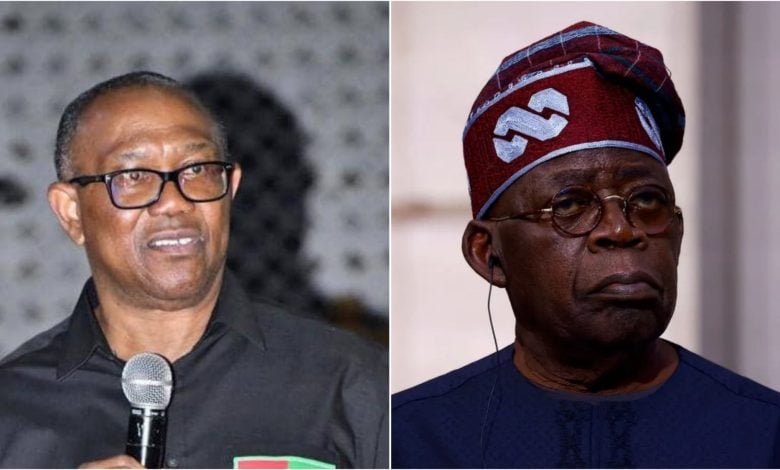
The media office of Peter Obi has opened a fresh attack on the administration of President Bola Tinubu, listing 10 areas it described as major failures of the Federal Government ahead of the 2027 presidential election.
The office, in a statement issued on Sunday and signed by Idris Zekeri Jnr, also defended Obi’s record in public office, saying the former Anambra State governor has the experience required to lead Nigeria.
The statement came amid the growing political contest ahead of the upcoming election, with Obi already positioned as the presidential candidate of the Nigeria Democratic Congress (NDC).
The former Labour Party presidential candidate has continued to present his record in Anambra and his plans for Nigeria as the basis for his campaign.
His media office said attempts by supporters of the Tinubu administration to question his popularity would not change the issues being raised by Nigerians.
It dismissed what it described as claims by “surrogate campaigners” that Obi’s political standing had been exaggerated.
The office argued that Obi was not entering the 2027 race as a politician without executive experience.
It pointed to his tenure as governor of Anambra State between 2006 and 2014, including his return to office after the 2010 governorship election.
According to the statement, Obi’s experience in government, business and banking placed him in a position to understand both public-sector administration and private-sector management.
The media office also relied heavily on what it described as Obi’s record of financial management while he was governor.
It recalled claims contained in his 2023 presidential manifesto that his administration left about $500 million in investments and savings, including $156 million in dollar-denominated bonds.
The statement said the record was important because Obi’s argument for the presidency was built around prudent management of public resources.
It argued that his administration showed that a government could spend on development while also saving for the future.
Education was another area highlighted by the media office.
It recalled Obi’s administration’s decision to return mission schools to their original owners and work with them in the management of the institutions.
The office claimed that Anambra’s position in WAEC and NECO performance improved significantly during the period, eventually reaching first position for three consecutive years.
It also mentioned scholarships, healthcare projects, poverty mapping and other human-capital programmes as part of Obi’s record in the state.
On healthcare, the statement said more than 12 health institutions, including two hospitals, secured accreditation during his tenure.
It claimed that there had been no accredited institution of that category when he assumed office.
The office also highlighted Obi’s relationship with international development partners.
It listed the World Bank, UNDP, DFID and the European Union among organisations that worked with Anambra during his administration.
It further cited engagements with foreign governments and claimed that Obi received recognition from development organisations for some of the programmes implemented by his government.
His media office also pointed to the use of data in governance.
It said the former governor employed poverty mapping, aerial mapping and the Anambra Integrated Development Strategy to guide government planning.
The statement said Obi’s background in banking and business also gave him experience outside politics before he became governor.
It added that the combination of private-sector experience, financial management and executive leadership was part of the reason his supporters believe he should be given the opportunity to lead Nigeria.
“Peter Obi is not asking Nigerians to make him President so that he can learn how government works,” the statement declared.
“He is asking Nigerians to entrust him with Nigeria after demonstrating, as Governor of Anambra, how he manages money, builds institutions, invests in human capital and plans for the future,” it added.
The media office then turned its attention to the Tinubu administration.
It listed what it considered 10 major areas where the Federal Government had failed to meet the expectations of Nigerians.
The rising cost of living was placed at the centre of its criticism.
The office argued that the removal of the petrol subsidy and other economic reforms had placed a heavy burden on households.
It linked the reforms to higher transportation costs and increases in the prices of food and other basic necessities.
The naira’s depreciation was also criticised.
According to the statement, the weaker currency increased the cost of imported goods, medicines, machinery and industrial inputs.
It said businesses that depended on imported materials had been forced to operate under increased costs, with the burden eventually passed to consumers.
Inflation and falling purchasing power formed another part of the criticism.
The office argued that although government had repeatedly defended its economic reforms, many Nigerians were still struggling to meet basic needs.
It said the increase in prices had reduced the value of salaries and household incomes.
The statement also criticised the government over unemployment and economic opportunities.
It argued that many young Nigerians were still finding it difficult to secure stable employment and access productive opportunities.
The media office said the country needed an economy capable of creating sustainable jobs rather than one where citizens continued to struggle with rising living expenses.
Security was another major issue raised.
The office accused the administration of failing to completely address terrorism, banditry, kidnapping and communal violence in different parts of the country.
It argued that the continued attacks and abductions had affected the confidence of citizens and businesses.
The media office also raised concerns about transparency and public trust.
It referred to controversies surrounding government spending, appointments, procurement and the management of public resources.
It said these issues had continued to fuel questions about accountability in government.
Another concern was the perceived difference between government promises and the experiences of ordinary Nigerians.
The office argued that while the Federal Government had continued to highlight its reforms and projects, many citizens were more concerned about what they could afford in the markets, the cost of transportation, security and access to jobs.
It also accused the administration of failing to sufficiently cushion the immediate consequences of its economic policies.
In June, the Presidency criticised Obi’s record as governor and argued that he lacked the leadership credentials to defeat Tinubu in 2027.
Obi has, however, continued to insist that the election should be decided by the condition of the country and the welfare of Nigerians rather than political structures.
In August, he also backed the removal of petrol subsidy, saying the problem was not necessarily the policy but how the savings from it were being managed.
“Well, I subscribe, and I maintain that you need to remove subsidy. Mismanagement of the proceeds should not be the reason for not removing it,” Obi said.
While the former governor supports subsidy removal in principle, his campaign has maintained that Nigerians should be able to see tangible benefits from the difficult reforms.
The Federal Government, on its part, has repeatedly defended the reforms.
Tinubu has argued that the subsidy regime placed an unsustainable burden on government finances and that removing it was necessary to prevent a deeper fiscal crisis.
The President has also pointed to measures including the CNG programme, increased revenue allocation to states and local governments, infrastructure projects and efforts to attract investment as evidence that the reforms are beginning to produce results.
The National Bureau of Statistics has also reported real GDP growth of 3.89 per cent year-on-year in the first quarter of 2026, while inflation has moderated significantly from its earlier peak.
The Obi media office said the government could not rely solely on inherited challenges to justify its performance.
It argued that Nigerians would ultimately judge the administration based on the conditions they face after more than three years in office.
“The fundamental question is not whether Tinubu inherited a difficult Nigeria. He did.
“The question is whether, after taking difficult decisions, Nigerians are better off today, and whether the government has convincingly demonstrated that today’s sacrifice is producing tomorrow’s prosperity.”