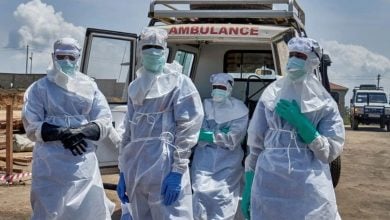
Senate Asks FG To Enforce Mandatory Screening At Borders Over Ebola

The Nigerian Senate has called on the Federal Government to enforce compulsory health screening for all international travellers arriving in the country to prevent the importation of Ebola and other infectious diseases.
Politics Nigeria reports that the proposed measures include health declaration forms, temperature checks and symptom screening at all international airports, seaports and designated land borders.
This was just as the Senate also called for enhanced screening of travellers who have visited or transited through affected areas within the previous 21 days, regardless of their nationality or country of departure.
The resolutions were adopted on Wednesday following a motion titled “Urgent Need to Enforce Mandatory Health Screening at All International Airports and Other Entry Points to Prevent the Importation of Ebola and Other Epidemic-Prone Diseases into Nigeria.”
Politics Nigeria reports that the motion was sponsored by Senator Francis Adedayo Faduyile, representing Ondo South Senatorial District, after the federal government confirmed a case of the virus in Abuja.
The Senate urged the Federal Government, through the Federal Ministry of Budget and Economic Planning, to release emergency funds from service-wide votes to support agencies involved in preventing and controlling the disease.
It also called on the Federal Ministry of Health and Social Welfare, the Federal Airports Authority of Nigeria and the Nigeria Immigration Service to equip all entry points with trained Port Health officers, thermal scanners, protective equipment and isolation rooms.
The lawmakers further urged the government to ensure that isolation and treatment centres were ready for use in all 36 states and the Federal Capital Territory (FCT).
They also recommended exit screening for departing passengers during any declared public health emergency.
In addition, it called on the National Assembly to work with the Ministry of Health to repeal and reenact the Quarantine Act of 1926, replacing it with modern public health legislation aligned with the International Health Regulations (IHR 2005).
The existing law, originally enacted in 1926 and now cited as the Quarantine Act Cap Q2, Laws of the Federation of Nigeria 2004, provides the legal framework for preventing and controlling the introduction and spread of dangerous infectious diseases.
Presenting the motion, Faduyile raised concerns over the spread of the Bundibugyo Ebola outbreak across African countries and the risk of infected travellers entering Nigeria through third countries.
He said the outbreak in the Democratic Republic of Congo (DRC), declared in May 2026, had exceeded 9,000 confirmed cases and 4,400 deaths, describing it as the second-largest Ebola outbreak in history.
The senator also noted that the World Health Organization had designated the outbreak a Public Health Emergency of International Concern and that there was no approved vaccine or treatment for the strain.
He further cited the spread of the outbreak to Uganda and Kenya, noting that a traveller had moved from the DRC by road to Kampala before flying to Nairobi, demonstrating how infected persons could pass through multiple countries.
Faduyile said the Nigeria Centre for Disease Control and Prevention (NCDC) had rated the risk of Ebola being imported into Nigeria as high.
He recalled that Nigeria recorded an Ebola case in July 2014 after an infected traveller arrived through Lagos airport.
The senator commended the Federal Government for introducing health declaration forms, establishing a Presidential Task Force and strengthening screening at entry points.
However, he expressed concern that the health declaration requirement was narrowed on September 22, 2026, to travellers from selected countries, excluding Kenya.
He also highlighted the shortage of Port Health personnel and screening equipment at departure halls and other entry points, alongside the continued reliance on the 1926 Quarantine Act.
Faduyile warned that Nigeria’s existing disease burden made it vulnerable to another public health emergency.
According to him, the country had recorded 1,138 confirmed Lassa fever cases and 268 deaths in 2026, while cholera had caused more than 65,000 suspected cases and diphtheria had recorded over 10,000 confirmed cases.
He stressed that protecting the country’s entry points was less costly than managing an imported case and urged the government to adopt measures consistent with international health regulations without imposing travel bans or discriminating against travellers.
The Senate also urged Nigerians to maintain preventive measures by making hand sanitisers available at event centres, educational institutions, private facilities and public places.
However, the lawmakers rejected a proposal to mandate the Committees on Health, Primary Healthcare, Development and Disease Control, Aviation, Interior and Appropriations to work with relevant agencies, inspect major entry points and submit a report within four weeks for further legislative action.
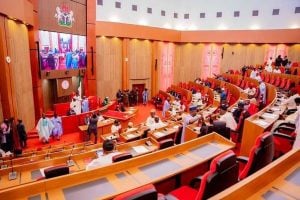
The Senate subsequently mandated its Committee on Legislative Compliance to ensure the implementation of the resolutions.