Peter Obi Lists Tinubu’s Failures Since Assuming Office in 2023
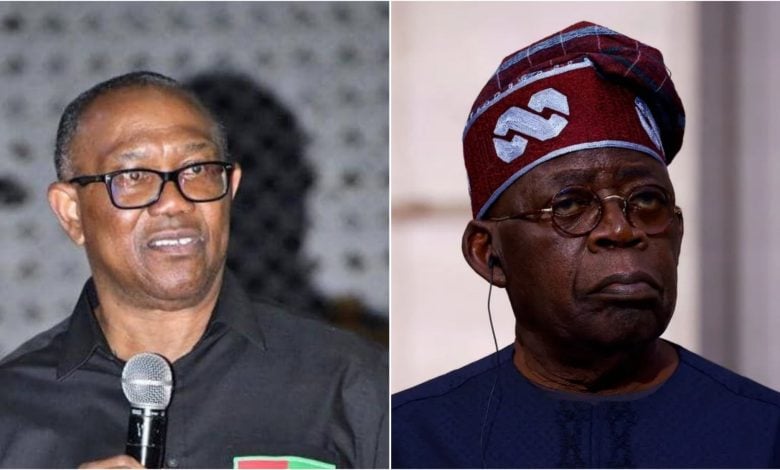
The presidential candidate of the Nigeria Democratic Congress (NDC), Peter Obi, has accused President Bola Tinubu of worsening poverty, insecurity, corruption and electricity problems in Nigeria since assuming office in May 2023.
Obi said more than 140 million Nigerians were multidimensionally poor, while approximately 16 million Nigerians had been pushed into extreme poverty in 2026 under the Tinubu administration.
The former Anambra State governor made the allegations on Monday, October 26, in a statement.
This follows the inauguration of the NDC Presidential Campaign Council in Abuja, where he outlined his assessment of the country’s condition and presented his vision for a new Nigeria ahead of the 2027 general elections.
In his remarks, Obi described Nigeria as a country blessed with abundant natural resources but struggling with widespread poverty, unemployment, inequality and insecurity.
He said, “Regrettably, over 140 million Nigerians are multidimensionally poor, representing more than 60% of the population.”
According to him, corruption remains widespread, while insecurity has affected communities across the country. He also criticised the rising cost of living and the economic hardship faced by households despite the removal of the fuel subsidy and increased government borrowing.
Obi questioned the benefits Nigerians had received from the government’s economic policies, particularly in relation to productivity and living standards.
“Even with the removal of the fuel subsidy and reckless borrowing, with a debt of over ₦165 trillion, there has been little or no corresponding increase in productivity,” he said.
The NDC presidential candidate accused the Tinubu administration of presiding over worsening economic conditions since taking office in 2023. He also alleged that the president had contributed to the growing number of Nigerians living in extreme poverty.
“In the last three years, President Tinubu has foisted on Nigeria a reign of corruption and duplicity, resulting in extreme poverty,” Obi said.
He further claimed that Tinubu had made about 16 million Nigerians extremely poor in 2026, although he did not provide supporting data for the figure in his remarks.
Obi also criticised the president’s response to the economic hardship, referring to Tinubu’s recent remarks at the launch of his re-election campaign in Kaduna, where the president blamed past administrations and opposition leaders for the country’s economic difficulties.
The former governor argued that the current administration had failed to provide the leadership required to address the challenges confronting Nigerians.
“What is clear is that President Tinubu does not have the competence, the capacity, the character, compassion or the commitment to solve the problems he created,” he said.
Obi also raised concerns about Nigeria’s electricity supply, arguing that unreliable power had continued to affect businesses, healthcare facilities, schools and households.
He said the president had promised to address the country’s electricity challenges but maintained that Nigerians were still struggling with inadequate power supply.
According to Obi, businesses cannot expand efficiently without reliable electricity, while hospitals and schools face difficulties delivering essential services. He added that households were forced to bear additional financial burdens because of the situation.
The NDC candidate said his party would pursue an electricity reform programme focused on reliability, affordability, investment and accountability if given the opportunity to govern.
He explained that the proposed reforms would involve working with federal and state institutions, regulators, electricity operators and investors to address problems affecting power generation, transmission and distribution.
Obi also accused the Tinubu administration of worsening insecurity and divisions across the country. He alleged that corruption had spread through public institutions and weakened confidence in the country’s governance system.
“Under President Tinubu, Nigeria is more divided than ever, more terrorised than ever and more insecure than ever,” he said.
He further alleged that the country was experiencing a crisis of values, citing concerns about public budgets, laws and the integrity of state institutions.
“Nothing is sacred. Nothing is spared from degradation, not budgets, not laws, not institutions,” Obi added.
The former Anambra governor said his engagements with Nigerians across different parts of the country had convinced him that citizens wanted a more productive nation where good governance, accountability, fairness and justice were reflected in the conduct of public officials.
He called on members of the NDC and Nigerians from different backgrounds to support his political project alongside the party’s vice-presidential candidate, Senator Rabiu Musa Kwankwaso.
“I, Peter Obi, with my very dear elder brother, Rabiu Musa Kwankwaso, implore and beckon all of you, committed members of our great party, the NDC, and all Nigerians, to join us in this crusade of rebuilding our dear and most endowed nation, Nigeria,” he said.
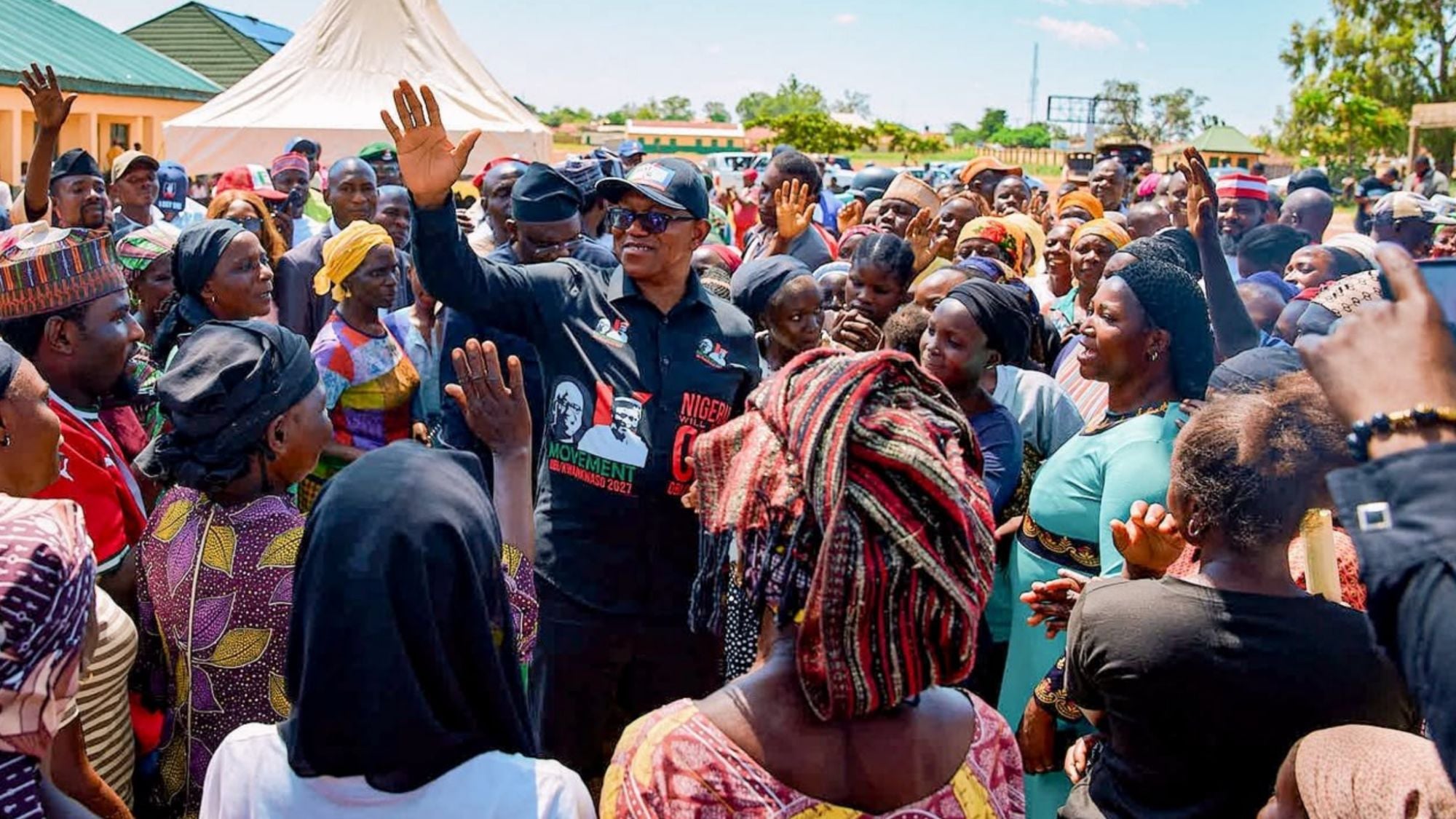
Obi said the party’s vision was to build a country united by a shared purpose and committed to fairness, justice, equity, productivity, inclusion and development.
He added that an NDC-led government would prioritise the security and welfare of citizens, promote accountability in public office and work towards ensuring that every Nigerian child had access to education.
The party’s presidential candidate also promised to subsidise education to prevent children and eligible Nigerians from being excluded from learning because of financial difficulties.
“In addition, we shall subsidise education to ensure that no child or able Nigerian is left behind in the pursuit of education,” he said.
He also pledged to introduce targeted subsidies for critical sectors of the economy, including education, agriculture and energy, arguing that such interventions would support citizens and stimulate productivity.
Obi said Nigeria’s natural resources should be managed more effectively to improve living conditions and create opportunities for citizens.
“Our natural endowment will no longer be wasted or mismanaged,” he stated.
He further promised that he and Kwankwaso would work to reduce the cost of living and lift Nigerians out of poverty if elected in 2027.
“Let me conclude by stating that Senator Rabiu Musa Kwankwaso and I are dedicated to working for a New Nigeria. We will work to aggressively drive down the cost of living and pull our people out of poverty,” he said.
The NDC campaign council inauguration comes amid preparations by political parties for the 2027 general elections. The party has said its campaign structure would provide strategic leadership, coordinate nationwide mobilisation and promote what it describes as a people-centred and issue-based campaign.
The council is chaired by the party’s National Leader, Senator Henry Seriake Dickson, while Obi serves as co-chairman. The party’s National Chairman, Senator Cleopas Moses Zuwoghe, was named vice-chairman, while Kwankwaso, the party’s vice-presidential candidate, was appointed co-vice-chairman.
Barrister Ikenna Morgan Enekweizu, the party’s National Secretary, was named secretary of the council, while Mallam Ibrahim Hussain Abdulkarim was appointed director-general.
The inauguration followed criticism of the campaign council by Daniel Bwala, an aide to President Tinubu, who questioned the composition of the list announced by the NDC.
In a post on X on Sunday, October 25, Bwala described the council as being dominated by content creators and alleged that the party had failed to identify some of its media supporters in mainstream broadcasting organisations.
“@PeterObi and NDC have released their list of campaign council members; and as expected it is filled with content creators,” Bwala wrote.
“They stylishly refused to name their campaign media surrogates in the mainstream media masquerading as OAP.”
Bwala did not identify any broadcaster in the post or provide specific examples to support his allegation.
The NDC has said its campaign council would coordinate the party’s activities and support its candidates ahead of the 2027 elections. Obi’s remarks at the inauguration focused on the economic, security and governance challenges he believes the country faces under Tinubu, while outlining the policies he says the NDC would pursue to address them.