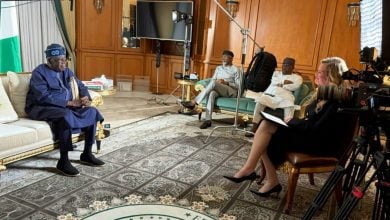
2027: Sowore Tackles Fashola, Vows To Scrap NELFUND If Elected

The presidential candidate of the African Action Congress (AAC), Omoyele Sowore, has vowed to abolish the Nigerian Education Loan Fund (NELFUND) if elected president in 2027.
Sowore made the declaration on Thursday in a Facebook post while responding to former governor Babatunde Fashola of Lagos state, who had challenged opposition candidates to promise to scrap the student loan programme introduced by President Bola Tinubu’s administration.
The AAC presidential candidate described Fashola as one of the most deceptive figures working with Tinubu, insisting that education should be a right rather than a privilege.
He argued that Nigerian students should not be forced to incur debts to obtain university degrees, accusing government officials of promoting student loans while sending their own children to expensive schools abroad with allegedly stolen public funds.
Sowore wrote: “#Sowore2027 will abolish NELFUND’s student loan scheme and replace it with study grants.
“Fashola is one of the most deceptive people working with Tinubu.
“For the avoidance of doubt, under an @aacparty-run government, education will be a right, not a privilege, and young Nigerians should not have to mortgage their future to obtain a degree.
“They keep selling debt as opportunity, telling Nigerians to borrow their way through university while their own children attend some of the most expensive schools abroad, funded by proceeds stolen from Nigerians.
“We reject the peonage they package as student loans. Our commitment is clear: study grants and publicly funded education.”
Fashola had challenged opposition presidential candidates to campaign on a promise to scrap NELFUND, arguing that the beneficiaries and their families would oppose such a proposal.
The former minister of works and housing made the challenge on Tuesday during an appearance on Channels Television’s Politics Today programme.
He described the student loan initiative as one of the Tinubu administration’s reforms that had helped ease the financial burden on families struggling to fund tertiary education.
Tinubu established NELFUND in April 2024 after signing the Student Loans (Access to Higher Education) Act into law, providing for interest-free loans to eligible students in tertiary institutions.
As of October 3, 2026, the fund said it had disbursed more than N372 billion to 1,635,676 beneficiaries across 312 tertiary institutions nationwide.
Fashola defended the initiative, explaining that it was introduced to help families cope with rising expenses, including rent, transportation, healthcare and education.
“This led to the creation of NELFUND to help families pay school fees and provide student allowances,” he said.
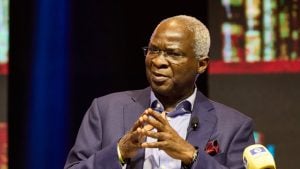
He maintained that more than one million Nigerians were already benefiting from the scheme, adding that the number of beneficiaries continued to increase.
“I challenge the opponents to promise to scrap NELFUND and see how beneficiaries and their families react. They won’t dare,” Fashola said.
The former governor also attributed Nigeria’s cost-of-living crisis to several global developments, including the COVID-19 pandemic, the Russia-Ukraine war and the conflict in the Middle East.
According to him, disruptions to global production and supply chains, rising shipping costs and wartime insurance premiums contributed to higher prices of goods and services.
“Thirdly, there was the unexpected war in the Middle East, which further worsened the situation,” he said.
“Everybody now knows the Strait of Hormuz even the tomato seller, and prices goods based on replacement costs.”