
Crisis Rocks Nigerian Football as NFF Summons Emergency Meeting
Nigeria’s football administration is facing fresh uncertainty as the Nigeria Football Federation prepares for an emergency Congress meeting in Abuja following reports of the resignation of President Ibrahim Gusau and several members of the Executive Committee.
The emergency meeting, scheduled for 12 noon today, is expected to give members of the NFF Congress an opportunity to deliberate on the latest developments and determine the way forward for the federation.
The meeting was convened by members of the Congress, with an invitation signed by Yakubu Sarma and addressed to state football association chairmen, club representatives, the Referees Association, Coaches Association, Players Union and the Nigeria Referees Association.
Attendance was described as mandatory, underscoring the seriousness of the situation confronting the federation.
Congress to Decide Next Steps
The Congress is expected to examine the current situation within the NFF, the status of the Executive Committee and Secretariat, and the possible impact of the crisis on the governance, stability and independence of the federation.
Members will also consider measures available under the statutes of the NFF, the Confederation of African Football and FIFA before deciding on the next course of action.
The meeting comes after reports that Gusau and several members of his board stepped down on Wednesday following growing pressure over the administration of Nigerian football.
The reported departures have reportedly left eight of the 13 members of the executive committee either resigned or no longer in their positions, creating uncertainty over the immediate leadership of the federation.
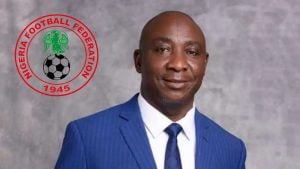
Gusau became NFF president in September 2022 after winning the federation’s elective congress in Benin City, Edo State.
DSS Scrutiny Adds to Pressure
The leadership crisis has also emerged against the backdrop of investigations by security and financial authorities into issues involving the federation.
The Department of State Services is reportedly examining documents connected to a N17 billion intervention fund approved by President Bola Tinubu in 2024 to clear outstanding salaries, bonuses and other financial obligations owed to Nigeria’s national teams.
A source familiar with the matter said the DSS had requested documents relating to the funds.
“It’s a normal thing for DSS to go through all documents relating to the funds released them,” the source said, rejecting suggestions that the investigation was designed to witch-hunt NFF officials.
The N17 billion matter is reportedly separate from another intelligence investigation involving the DSS and the National Intelligence Agency over alleged contacts between some NFF officials and foreign nationals.
A security source described some of the alleged communications as “highly disturbing”, saying the investigation was focused on issues considered to have wider national security implications.
The source also stressed that the investigation into the intervention fund was different from the intelligence inquiry.
“It is true that President Bola Tinubu in 2024 approved N17 billion as a special intervention fund to help NFF clear outstanding payments owed to Nigeria’s national teams. However, that falls within the purview of the EFCC, not the DSS and NIA,” the source said.
Poor Results Deepen Discontent
The administrative turmoil has been accompanied by growing dissatisfaction with the performances of Nigeria’s national teams.
The Super Eagles have failed to qualify for the 2022 and 2026 FIFA World Cups, while the Super Falcons recently suffered a historic setback by missing out on the 2027 Women’s World Cup.
The Falcons had participated in every edition of the women’s World Cup since the tournament began in 1991. Their hopes of extending that record ended after a difficult qualification campaign.
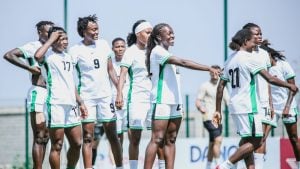
Nigeria’s women’s team lost 1-0 to Cameroon in the quarter-final of the 2026 Women’s Africa Cup of Nations, a result that ended their title defence and sent them into the World Cup qualification playoff route.
They subsequently suffered a 2-1 defeat to South Africa’s Banyana Banyana in the playoff, confirming their absence from the 2027 tournament in Brazil.
Questions have also been raised about the performances of Nigeria’s youth teams.
The Golden Eaglets, despite Nigeria being the most successful country in FIFA U-17 World Cup history with five titles, have missed the last three editions of the competition.
The country’s U-23 team, the Dream Team, has similarly struggled to reproduce the success associated with the side that made history by winning Olympic football gold at Atlanta 1996.
These setbacks have increased calls from football stakeholders and supporters for changes in the administration of the game, particularly in the areas of development, funding, coaching and management of the national teams.
September NFF Election Faces Uncertainty
The reported resignations have also raised questions about the NFF’s planned elective Congress scheduled for September 27 in Lafia, Nasarawa State.
A new board is expected to be elected at the congress, but the leadership vacuum created by the reported departures has triggered speculation about whether the election will proceed as originally planned.
An insider linked the resignations to concerns surrounding the ongoing investigations and suggested that the situation could have implications for the September election.
“That at least half of NFF executive have or are contemplating resignation, may not be unconnected with the fear of DSS and NIA probe, fuelling fears on the possibility of holding the NFF board election scheduled for September 27 in Lafia, Nasarawa State,” the insider said.
Calls Grow for Wider Reform
While the crisis has led to demands for a change in leadership, some voices have warned that simply removing officials may not resolve the deeper problems within Nigerian football.
Bashir Ahmad, a former aide to ex-President Muhammadu Buhari, recently questioned what he described as an increasing campaign to force Gusau out of officeBashir Ahmad, a former aide to ex-President Muhammadu Buhari, recently questioned what he described as an increasing campaign to force Gusau out of office.
“There appears to be a growing campaign by some individuals to force the President of the Nigeria Football Federation, NFF, Mallam Ibrahim Gusau, out of office,” Ahmad wrote on X.
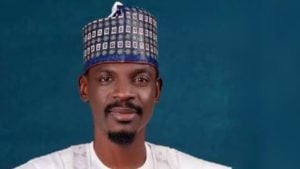
He acknowledged the need for accountability but said the intensity of the campaign should also raise questions about its motivation.
“I believe that while criticism and accountability are necessary, the apparent intensity of the campaign against the NFF leadership raises questions about its motives,” he said.
Ahmad argued that the problems confronting Nigerian football predated Gusau’s administration and required broader reforms rather than a focus solely on changing individuals.
He identified areas such as funding, administration, grassroots development, player welfare, coaching and infrastructure as issues that require sustained attention.
“So, the question we should now ask is are we trying to fix Nigerian football or are we simply trying to remove individuals from positions of responsibility?” he asked.
He, however, maintained that officials should be held responsible where they fail in their duties.
“If there are areas where the NFF has failed, those responsible should be held accountable,” Ahmad said.
“But removing an elected football administrator should not become an objective in itself, particularly when there are ongoing efforts to reform the system.”
He also warned that repeated changes in football leadership could further disrupt attempts to address the sport’s long-standing challenges.
“Constant attempts to remove football administrators before they have the opportunity to implement meaningful reforms can further weaken the institution and distract from the real issues affecting the game,” he said.
Ahmad concluded that the focus should remain on the development of Nigerian football rather than the interests of individuals or factions.
“The NFF belongs to Nigerian football, not to any individual or interest group,” he said.
“What should ultimately matter is the development of the sport, the welfare of our players, the growth of grassroots football and the return of Nigerian football to where it belongs.”

One Comment