‘He Signed for Himself’ — Top Igbo Leaders Reject Obi’s One-Term Deal with Kwankwaso
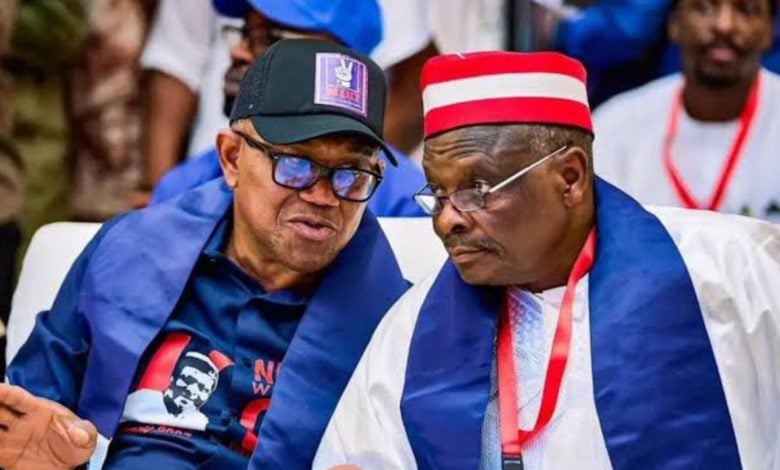
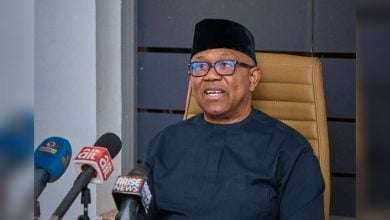
Nigeria Democratic Congress (NDC) Presidential Candidate, Peter Obi reported one-term agreement with Senator Rabiu Musa Kwankwaso has ignited reactions across the Southeast, with several prominent Igbo leaders distancing the region from the arrangement.
Politics Nigeria earlier reported that NDC Vice Presidential Candidate, Kwankwaso disclosed that Obi had agreed to serve only one term if elected president in 2027 before handing over power to the North.
However, influential voices from the Southeast have rejected any suggestion that the agreement represents the position of the Igbo people, describing it as a personal political commitment that cannot be imposed on an entire region.
Speaking on the development, elder statesman and founding national chairman of the All Progressives Grand Alliance (APGA), Chief Chekwas Okorie, said the arrangement was entered into by Obi in his personal capacity and should not be interpreted as a collective decision of Ndigbo.
According to him, Obi did not negotiate on behalf of the Southeast and therefore lacks the authority to determine the political aspirations of future Igbo presidential contenders.
“Peter Obi did not sign the agreement for the Igbo; he signed for himself. Even before entering into that agreement, he had always said he would do only one term,” Okorie said.
He argued that while political agreements are common in politics, they remain binding only on the individuals and parties involved. He noted that such an arrangement would not stop other Igbo politicians from seeking the presidency in 2031 under different political platforms.
Okorie pointed out that former Vice President Atiku Abubakar had also previously indicated a willingness to serve a single term if elected president, stressing that such declarations are not unusual in Nigerian politics.
Drawing parallels with past political developments, he recalled claims that former President Goodluck Jonathan had entered into a similar understanding before assuming office, though the former president neither confirmed nor denied the allegation.
Okorie further stated that if the political party involved had decided to return its presidential ticket to the North after Obi’s tenure, that decision remains an internal party matter and does not extend to the broader Igbo population.
He maintained that several notable politicians from the Southeast could still pursue presidential ambitions in the future, regardless of any arrangement reached within a particular party.
Former Minister of Labour and Employment, Senator Chris Ngige, also dismissed attempts to link the Southeast to the reported pact.
Ngige said the arrangement concerns only those who negotiated it and should not be viewed as a regional agreement.
“The arrangement you are talking about is NDC matter and I’m not a member of NDC and I have no opinion on what they are doing,” he said.
The former minister, however, reiterated his long-standing support for constitutional reforms that would institutionalise rotational leadership across the country’s six geopolitical zones.
He advocated a single five-year presidential tenure, arguing that such a system would provide equal opportunities for all regions and reduce political tensions associated with power rotation.
Former Managing Director of the National Inland Waterways Authority (NIWA), Dr. George Moghalu, said opinions on the matter would naturally differ depending on the perspective from which it is viewed.
According to him, the arrangement may appear reasonable when considered from the standpoint of preserving the North-South power-sharing principle.
However, he acknowledged that many people in the Southeast see it differently because it potentially limits the duration of an Igbo presidency.
Also weighing in, prominent businessman and Igbo leader, Chief Modestus Umenzekwe, rejected the idea of a four-year presidency for an Igbo candidate.
He argued that if an Igbo person eventually secures the nation’s highest office, such a leader should enjoy the same opportunity to complete two terms as previous presidents from other regions.
“For me, with due respect to NDC, as a proud Igbo man, why should we stay for four years instead of eight years like others? It is not in favour of Igbo,” he said.
Former National Vice Chairman of Ohanaeze Ndigbo in the Southeast, Ichie Damian Okeke-Ogene, took a different position.
While acknowledging the existence of the broader zoning principle between the North and South, he stated that agreements freely entered into by political actors should be respected.
He said that if Obi indeed agreed to serve only one term, such an undertaking should be honoured if he eventually wins the presidency.
The debate also attracted reactions from civil society groups and youth organisations in the region.
The Coalition of Southeast Youth Leaders (COSEYL) insisted that no politician can enter into a binding political arrangement on behalf of the entire Igbo nation without broad consultation.
The group’s President-General, Comrade Goodluck Ibem, warned against portraying personal political decisions as collective regional positions.
He stressed that democratic governance must be guided by constitutional provisions and the will of voters rather than private political understandings.
Similarly, Ogbako Ndígbo Worldwide stated that any reported agreement remains a matter for the individuals and political parties involved.
Its President-General, Dr. Akpelu Azunna, said many Igbo people would still consider a single presidential term acceptable if it provides the region with an opportunity to demonstrate leadership at the national level.